

Notes on *Gentle and Lowly*
Gentle and Lowly: The Heart of Christ for Sinners and Sufferers, Dane Ortlund (Crossway, 2020)
Main Idea/Takeaway
The heart of Jesus, according to his own testimony, is gentle and lowly to all who cry to him for help, which cannot be over-celebrated or too exaggerated.
“Gentle and lowly" This, according to his own testimony, is Christ's very heart. This is who he is. Tender. Open. Welcoming. Accommodating. Understanding. Willing. If we are asked to say only one thing about who Jesus is, we would be honoring Jesus's own teaching if our answer is, gentle and lowly." (21)
“This is the one whose deepest heart is, more than anything else, gentle and lowly.” (24)
Interaction
"Miracles are the only truly natural thing in a world fallen to unnatural, demonized." (31)
"Jesus has felt the full force of our temptation because he endured it unto purity whereas we give in. Jesus endured temptation all the way to purity, thus enduring temptation longer, more fully." (48)
"This truth changes everything in our experience of pain." (50)
"I see the grammatical similarity, but what is the implication? Co-suffer/restrained passion?" (52)
"Our places of most severe brokenness are the places where Jesus is most strongly drawn." (83)
"'Most humble' In what moment was he most humble? The cross. Humility is not a virtue for tranquility, but for chaos." (97)
"We must understand anger as a form of love- a defense of our loves against threats." (109)
"God with us became God in us." (124)
"His anger requires provocation." (148)
"What are the implications here for how to treat fellow Christians who differ on convictions? We may disagree with them, but they are so loved by God. Tread carefully with God's beloved." (173)
"Best page in the book!" (179)
"Oh to see the brethren this way!" (187)
"Good Friday meditation" (200)
"Crucial qualification" (204)
"All good things do not come to an end, because the best of things will last forever and only get better throughout eternity." (213)
"On applying to life." (215)
Table of Contents
Introduction
I. His Very Heart
II. His Heart in Action
III. The Happiness of Christ
IV. Able to Sympathize
V. He Can Deal Gently
VI. I Will Never Cast Out
VII. What Our Sins Evoke
VIII. To the Uttermost
IX. An Advocate
X. The Beauty of the Heart of Christ
XI. The Emotional Life of Christ
XII. A Tender Friend
XIII. Why the Spirit?
XIV. Father of Mercies
XV. His "Natural" Work and His "Strange" Work
XVI. The Lord, the Lord
XVII. His Ways Are Not Our Ways
XVIII. Yearning Bowels
XIX. Rich in Mercy
XX. Our Law-ish Hearts, His Lavish Heart
XXI. He Loved Us Then; He'll Love Us Now
XXII. To the End
XXIII. Buried in His Heart Forevermore
Epilogue
Favorite Quotes by Chapter
Introduction
“This is a book about the heart of Christ. Who is he? Who is he really? What is most natural to him? What ignites within him most immediately as he moves toward sinners and sufferers? What flows out most freely, most instinctively? Who is he?” (13)
“We are not focusing centrally on what Christ has done. We are considering who he is. The two matters are bound up together and indeed interdependent. But they are distinct. The gospel offers us not only legal exoneration--in-violably precious truth! -it also sweeps us into Christ's very heart.” (15)
I. His Very Heart
“One thing to get straight right from the start is that when the Bible speaks of the heart, whether Old Testament or New, it is not speaking of our emotional life only but of the central animating center of all we do.” (18)
“The point in saying that Jesus is lowly is that he is accessible. For all his resplendent glory and dazzling holiness, his supreme uniqueness and otherness, no one in human history has ever been more approachable than Jesus Christ. No prerequisites. No hoops to jump through.” (20)
“You don't need to unburden or collect yourself and then come to Jesus. Your very burden is what qualifies you to come. No payment is required; he says, "I will give you rest." His rest is gift, not transaction.” (21)
“This is not who he is to everyone, indiscriminately. This is who he is for those who come to him, who take his yoke upon them, who cry to him for help.” (21)
II. His Heart in Action
“But the dominant note left ringing in our ears after reading the Gospels, the most vivid and arresting element of the portrait, is the way the Holy Son of God moves toward, touches, heals, embraces, and forgives those who least deserve it yet truly desire it.” (27)
“The Jesus given to us in the Gospels is not simply one who loves, but one who is love; merciful affections stream from his innermost heart as rays from the sun.” (27)
“This is deeper than saying Jesus is loving or merciful or gracious. The cumulative testimony of the four Gospels is that when Jesus Christ sees the fallenness of the world all about him, his deepest impulse, his most natural instinct, is to move toward that sin and suffering, not away from it.” (30)
"When Jesus, the Clean One, touched an unclean sinner, Christ did not become unclean. The sinner became clean." (31)
"We are so used to a fallen world that sickness, disease, pain, and death seem natural. In fact, they are the interruption." (31)
"The New Testament teaches that we are united to Christ, a union so intimate that whatever our own body parts do, Christ's body can be said to do (1 Cor. 6:15-1). Jesus Christ is closer to you today than he was to the sinners and sufferers he spoke with and touched in his earthly ministry." (33)
III. The Happiness of Christ
“He drew near to us in the incarnation so that his joy and ours could rise and fall together-his in giving mercy, ours in receiving it.” (37)
“We tend to think that when we approach Jesus for help in our need and mercy amid our sins, we somehow detract from him, lessen him, impoverish him. Goodwin argues otherwise. Jesus surprises us in "exercising acts of grace, and from his continual doing good unto and for his members ... from his filling them with all mercy, grace, comfort, and felicity, himself becoming yet more full, by filling them."4 As truly God, Christ cannot become any more full; he shares in his Father's immortal, eternal, unchangeable fullness. Yet as truly man, Christ's heart is not drained by our coming to him; his heart is filled up all the more by our coming to him.” (38)
“When we today partake of that atoning work, coming to Christ for forgiveness, communing with him despite our sinfulness, we are laying hold of Christ's own deepest longing and joy.” (40)
IV. Able to Sympathize
“The reason that Jesus is in such close solidarity with us is that the difficult path we are on is not unique to us.” (47)
“That enticing * temptation, that sore trial, that bewildering perplexity- he has been there. Indeed, his utter purity suggests that he has felt these pains more acutely than we sinners ever could.” (48)
“One is that Jesus's sinlessness means that he knows temptation better than we ourselves do. C. S. Lewis made this point by speaking of a man walking against the wind. Once the wind of temptation gets strong enough, the man lies down, giving in-and thus not knowing what it would have been like ten minutes later. Jesus never lay down; he endured all our temptations and testings without ever giving in. He therefore knows the strength of temptation better than any of us. Only he truly knows the cost." (49)
“He himself is not trapped in the hole of sin with us; he alone can pull us out. His sinlessness is our salvation.” (49)
“Not only can he alone pull us out of the hole of sin; he alone desires to climb in and bear our burdens. Jesus is able to sympathize.” (49)
“If you are in Christ, you have a Friend who, in your sorrow, will never lob down a pep talk from heaven. He cannot bear to hold himself at a distance. Nothing can hold him back. His heart is too bound up with yours.” (50)
V. He Can Deal Gently
“What elicits tenderness from Jesus is not the severity of the sin but whether the sinner comes to him. Whatever our offense, he deals gently with us. If we never come to him, we will experience a judgment so fierce it will be like a double-edged sword coming out of his mouth at us (Rev. 1:16; 2:12; 19:15, 21). If we do come to him, as fierce as his lion-like judgment would have been against us, so deep will be his lamb-like tenderness for us (cf. Rev. 5:5-6; Isa. 40:10-11). We will be enveloped in one or the other. To no one will Jesus be neutral.” (54)
“This very care, this gentle dealing with all kinds of sinners, is what is most natural to him. Owen goes on to say that Christ "does not, in his dealings with us, more properly or more fully set out any property of his nature than he does his compassion, long-suffering, and forbearance."4 In other words, when Jesus "deals gently" with us, he is doing what is most fitting and natural to him.” (56)
“Our sinfulness runs so deep that a tepid measure of gentleness from Jesus would not be enough; but as deep our sinfulness runs, ever deeper runs his gentleness.” (56)
“Contrary to what we expect to be the case, therefore, the deeper into weakness and suffering and testing we go, the deeper Christ's solidarity with us. As we go down into pain and anguish, we are descending ever deeper into Christ's very heart, not away from it.” (57)
VI. I Will Never Cast Out
“So with Christ. We cling to him, to be sure. But our grip is that of a two-year-old amid the stormy waves of life. His sure grasp never falters. Psalm 63:8 expresses the double-sided truth: "My soul clings to you; your right hand upholds me.” (65)
“We have come, more deeply, to the doctrine of the perseverance of the heart of Christ. Yes, professing Christians can fall away, proving that they were never truly in Christ. Yes, once a sinner is united to Christ, there is nothing that can dis-unite them. But within the skeletal structure of these doctrines, what is the beating heart of God, made tangible in Christ? What is most deeply instinctive to him as our sins and sufferings pile up? What keeps him from growing cold? The answer is, his heart.” (66)
VII. What Our Sins Evoke
“But the grace of God comes to us no more and no less than Jesus Christ comes to us. In the biblical gospel we are not given a thing; we are given a person.” (69)
“If you are part of Christ's own body, your sins evoke his deepest heart, his compassion and pity. He "takes part with you"-that is, he's on your side. He sides with you against your sin, not against you because of your sin. He hates sin. But he loves you. We understand this, says Goodwin, when we consider the hatred a father has against a terrible disease afflicting his child--the father hates the disease while loving the child. Indeed, at some level the presence of the disease draws out his heart to his child all the more.” (71)
“God is not a platonic ideal, immovably austere, beyond the reach of meaningful human engagement. God is free of all fallen emotion, but not all emotion (or feeling) whatsoever--where do our own emotions come from, we who are made in his image?” (74)
“The Bible says that when God looks at his people's sinfulness, his transcendent holiness-
-his God-ness, his very divinity, that about God which makes him not us--is what makes him unable to come down on his people in wrath.” (74)
“The sins of those who belong to God open the floodgates of his heart of compassion for us. The dam breaks. It is not our loveliness that wins his love. It is our unloveliness.” (75)
VIII. To the Uttermost
“It is the most counterintuitive aspect of Christianity, that we are declared right with God not once we begin to get our act together but once we collapse into honest acknowledgment that we never will.” (78)
“And the present manifestation of his heart for his people is his constant interceding on their behalf.” (79)
“What then does it mean for Christ to intercede? Who are the parties involved? God the Father, on the one hand, and we believers, on the other. But why would Jesus need to intercede for us? After all, haven't we been completely justified already? What is there for Christ to plead on our behalf? Hasn't he already done all that is needed to fully acquit us? In other words, does the doctrine of Christ's heavenly intercession mean that something was left incomplete in his atoning work on the cross? If we speak of the finished work of Christ on the cross, does the doctrine of intercession suggest that the cross was actually left unfinished? The answer is that intercession applies what the atonement accomplished. Christ's present heavenly intercession on our behalf is a reflection of the fullness and victory and completeness of his earthly work, not a reflection of anything lacking in his earthly work. The atonement accomplished our salvation; intercession is the moment-by-moment application of that atoning work.” (79)
“Intercession is the constant hitting "refresh" of our justification in the court of heaven.” (80)
“The Son's intercession does not reflect the coolness of the Father but the sheer warmth of the Son.” (80)
“But the Father's own deepest delight is to say yes to the Son's pleading on our behalf.” (80)
“To the uttermost" in Hebrews 7:25 means: God's forgiving, redeeming, restoring touch reaches down into the darkest crevices of our souls, those places where we are most ashamed, most defeated. More than this: those crevices of sin are themselves the places where Christ loves us the most. His heart willingly goes there. His heart is most strongly drawn there.” (83)
“This is the explicit acknowledgment that we Christians are ongoing sinners. Christ continues to intercede on our behalf in heaven because we continue to fail here on earth. He does not forgive us through his work on the cross and then hope we make it the rest of the way.” (84)
IX. An Advocate
“To come to the Father without an advocate is hopeless. To be allied with an advocate, one who came and sought me out rather than waiting for me to come to him, one who is righteous in all the ways I am not--this is calm and confidence before the Father.” (89)
“Your salvation is not merely a matter of a saving formula, but of a saving person. When you sin, his strength of resolve rises all the higher. When his brothers and sisters fail and stumble, he advocates on their behalf because it is who he is. He cannot bear to leave us alone to fend for ourselves.” (91)
X. The Beauty of the Heart of Christ
"Everything that is lovely in God is in Christ, and everything that 15 or can be lovely in any man is in him: for he is man as well as God, and he is the holiest, meekest, most humble, and every way the most excellent man that ever was." (97)
“In our churches today we often refer to the glory of God and the glory of Christ. But what is it about God's glory that draws us in and causes us to conquer our sins and makes us radiant people? Is it the sheer size of God, a consideration of the immensity of the universe and thus of the Creator, a sense of God's transcendent greatness, that pulls us toward him? No, Edwards would say; it is the loveliness of his heart. It is, he says, a "sight of the divine beauty of Christ, that bows the wills, and draws the hearts of men. A sight of the greatness of God in his attributes, may overwhelm men.” (97)
“Seeing only his greatness, "the enmity and opposition of the heart, may remain in its full strength, and the will remain inflexible; whereas, one glimpse of the moral and spiritual glory of God, and supreme amiableness of Jesus Christ, shining into the heart, overcomes and abolishes this opposition, and inclines the soul to Christ, as it were, by an omnipotent power." (98)
“In other words, when we come to Christ, we are startled by the beauty of his welcoming heart. The surprise is itself what draws us in.” (98)
"There is no love so great and so wonderful as that which is in the heart of Christ." How might we, in our own way and time, do the same?” (100)
“But at the center, our job is to show our kids that even our best love is a shadow of a greater love. To put a sharper edge on it: to make the tender heart of Christ irresistible and unforgettable. Our goal is that our kids would leave the house at eighteen and be unable to live the rest of their lives believing that their sins and sufferings repel Christ." (100)
“But there's something he has shown me that runs even deeper than truth about God, and that is the heart of God, proven in Christ, the friend of sinners. Dad made that heart beautiful to me He didn't crowbar me into that; he drew me in.” (101)
XI. The Emotional Life of Christ
“The Son of God clothed himself with humanity and will never unclothe him-self. He became a man and always will be. This is the significance of the doctrine of Christ's ascension: he went into heaven with the very body, reflecting his full humanity, that was raised out of the tomb.” (103)
“One implication of this truth of Christ's permanent humanity is that when we see the feeling and passions and affections of the incarnate Christ toward sinners and sufferers as given to us in the four Gospels, we are seeing who Jesus is for us today.” (104)
“Our emotions are diseased by the fall, of course, just as every part of fallen humanity is affected by the fall. But emotions are not themselves a result of the fall. Jesus experienced the full range of emotions that we do (Heb. 2:17; 4:15).” (104)
“Yes, Jesus pronounced searing denunciations on those who cause children to sin, saying it would be a better fate if they were drowned (Matt. 18:6), not because he gleefully enjoys torturing the wicked but most deeply because he loves little children. It is his heart of love, not a gleeful exacting of justice, that rises up from his soul to elicit such a fearsome pronouncement of woe.” (109)
“What we are saying is that, yes, Christ got angry and still gets angry, for he is the perfect human, who loves too much to remain indifferent. And this righteous anger reflects his heart, his tender compassion. But because his deepest heart is tender compassion, he is the quickest to get angry and feels anger most furiously- and all without a hint of sin tainting that anger.” (110)
“While Christ is a lion to the impenitent, he is a lamb to the penitent--the reduced, the open, the hungry, the desiring, the confessing, the self-effacing. He hates with righteous hatred all that plagues you.” (111)
“As you consider those who have wronged you, let Jesus be angry on your behalf. His anger can be trusted. For it is an anger that springs from his compassion for you. The indignation he felt when he came upon mistreatment of others in the Gospels is the same indignation he feels now in heaven upon mistreatments of you.” (112)
XII. A Tender Friend
“The very two groups of people whom Jesus is accused of befriending in Matthew 11 are those who can't stay away from him in Luke 15. They are at ease around him. They sense something different about him.” (114)
“In Jesus Christ, we are given a friend who will always enjoy rather than refuse our presence.” (115)
“To be sure, Christ is indeed our ruler, our authority, the one to whom all allegiance and obedience are reverently due. Sibbes reminds us of that explicitly as he reflects on the friendship of Christ ("As he is our friend, so he is our king."). But equally, and perhaps less obvious or intuitive to us, the condescension of God in the person of his Son means that he approaches us on our own terms and befriends us for both his and our mutual delight.” (119)
XIII. Why the Spirit?
“The Spirit takes what we read in the Bible and believe on paper about Jesus's heart and moves it from theory to reality, from doctrine to experience.” (122)
“What is the advantage of the Spirit coming? The natural reading is that he will rectify something that is wrong. And what is wrong? "Sorrow has filled your heart" John 16:6). Apparently the coming of the Spirit will do the opposite: fill their hearts with joy. The Spirit replaces sorrow with joy.” (123)
“The Spirit is the continuation of the heart of Christ for his people after the departure of Jesus to heaven.” (123)
“All that we see and hear of the gracious heart of Jesus in his earthly life will, during his ascended state, enter into the consciousness of his people as experiential reality.” (125)
XIV. Father of Mercies
“The key is to understand that at the level of legal acquittal, the Father's wrath had to be assuaged in order for sinners to be brought back into his favor, but at the level of his own internal desire and affection, he was as eager as the Son for this atonement to take place. Objectively, the Father was the one needing to be placated; subjectively, his heart was one with the Son. We err when we draw conclusions about who he is subjectively based on what needed to happen objectively.” (128)
“What should come into our mind when we think about God The triune God is three in one, a fountain of endless mercies extending to, meeting, and over-flowingly providing for us in all our many needs and failures and wanderings. This is who he is, Father no less than Son, Son no less than Father.” (132)
“He is the tangible epitomization of God. Jesus Christ is the visible manifestation of the invisible God (2 Cor. 4:4, 6).” (133)
“When we see the heart of Christ, then, throughout the four Gospels, we are seeing the very compassion and tenderness of who God himself most deeply is.” (133)
XV. His "Natural" Work and His "Strange" Work
“Jesus provides new sharpness to who God is, but not fundamentally new content.” (135)
“But when he comes to show mercy, to manifest that it is his nature and disposition, it is said that he does it with his whole heart. There is nothing at all in him that is against it. The act itself pleases him for itself. There is no reluctance in him.” (139)
“Theologians speak of God's simplicity, by which we mean that God is not the sum total of a number of attributes, like pieces of a pie making a whole pie; rather, God is every attribute perfectly. God does not have parts. He is just. He is wrathful. He is good. And so on, each in endless perfection.” (140)
“God is unswervingly just. But what is his disposition? What is he on the edge of his seat eager to do? Ir you catch me off guard, what will leap out of me before I have time to regain composure will likely be grouchiness. If you catch God off guard, what leaps out most freely is blessing. The impulse to do good. The desire to swallow us up in joy." (140)
“For God to be merciful is for God to be God. Left to our own natural intuitions about God, we will conclude that mercy is his strange work and judgment his natural work. Rewiring our vision of God as we study the Scripture, we see, helped by the great teachers of the past, that judgment is his strange work and mercy his natural work.” (144)
XVI. The Lord, the Lord
“When we speak of God's glory, we are speaking of who God is, what he is like, his distinctive resplendence, what makes God God. And when God himself sets the terms on what his glory is, he surprises us into wonder.” (147)
“The bent of God's heart is mercy. His glory is his goodness. His glory is his lowliness. "Great is the glory of the LoRD. For though the Lord is high, he regards the lowly" (Ps. 138:5-6).” (147)
“But not once are we told that God is "provoked to love" or "provoked to mercy." His anger requires provocation; his mercy is pent up, ready to gush forth.” (148)
"Keeping steadfast love for thousands." This could equally be translated "keeping steadfast love to a thousand generations," as is explicitly stated in Deuteronomy 7:9: "Know therefore that the LORD your God is God, the faithful God who keeps covenant and steadfast love with those who love him and keep his commandments, to a thousand generations." This does not mean that his goodness shuts off with generation number 1,001. It is God's own way of saying. There is no termination date on my commitment to you. You can't get rid of my grace to you. You can't outrun my mercy. You can't evade my goodness. My heart is set on you.” (149)
XVII. His Ways Are Not Our Ways
“So God tells us in plain terms how tiny our natural views of his heart are. His thoughts are not our thoughts. His ways are not our ways. And not because we're just a few degrees off. No, "as high as the heavens are above the earth"-a Hebrew way of expressing spatial infinitude-_-"so are my ways higher than your ways and my thoughts than your thoughts" (v. 9). In verse 8 God says his ways and ours are different; in verse 9 he gets more specific and says his thoughts are higher. It's as if God is saying in verse 8 that he and we think very differently, whereas in verse 9 he is saying precisely how, namely, his "thoughts" (the Hebrew word doesn't merely mean 'passing mental reflection" but "plans," " devices," "intentions," "purposes") are higher, grander, enveloped in a compassion for which we fallen sinners have no natural category.” (158)
“There is indeed a great distance between God and us; we think small thoughts of God's heart, but he knows his heart is inviolably, expansively, invincibly set on us.”(159)
“He intends to restore you into the radiant resplendence for which you were created. And that is dependent not on you keeping yourself clean but on you taking your mess to him. He doesn't limit himself to working with the unspoiled parts of us that remain after a lifetime of sinning. His power runs so deep that he is able to redeem the very worst parts of our past into the most radiant parts of our future. But we need to take those dark miseries to him.” (161)
XVIII. Yearning Bowels
“Whom do you perceive him to be, in your sin and your suffer-ing? Who do you think God is-_-not just on paper but in the kind of person you believe is hearing you when you pray? How does he feel about you? His saving of us is not cool and calculating. It is a matter of yearning not yearning for the Facebook you, the you that you project to everyone around you. Not the you that you wish you were. Yearning for the real you. The you underneath everything you present to others.” (166)
“Out of his heart flows mercy; out of ours, reluctance to receive it.” (166)
“If the intensity of love maps onto the intensity of misery in the one beloved, and if our greatest misery is our sinfulness, then God's most intense love flows down to us in our sinfulness. Yes, God has hatred, Goodwin says--toward sin. And the combination of love for us plus hatred for sin equals the most omnipotent certainty possible that he will see us through to final liberation from sin and unfiltered basking in his own joyous heart for us one day.” (168)
XIX. Rich in Mercy
“It means the Christian life is a lifelong shedding of tepid thoughts of the goodness of God. In his justice, God is exacting; in his mercy, God is overflowing.” (172)
“But if he is essentially merciful, then for him to pour out mercy is for him to act in accord with who he is. It is simply for him to be God. When God shows mercy, he is acting in a way that is true to himself.” (173)
“Perhaps you carry a pain that will never heal till you are dead. If my life is any evidence of the mercy of God in Christ, you might think, I'm not impressed. To you I say, the evidence of Christ's mercy toward you is not your life. The evidence of his mercy toward you is his--mistreated, misunderstood, betrayed, abandoned. Eternally. In your place. If God sent his own Son to walk through the valley of condemnation, rejection, and hell, you can trust him as you walk through your own valleys on your way to heaven.” (179)
“To you I say, do you know what Jesus does with those who squander his mercy? He pours out more mercy. God is rich in mercy. That's the whole point.” (179)
“That God is rich in mercy means that your regions of deepest shame and regret are not hotels through which divine mercy passes but homes in which divine mercy abides. It means the things about you that make you cringe most, make him hug hardest.” (179)
XX. Our Lawish Hearts, His Lavish Heart
“There are two ways to live the Christian life. You can live it either for the heart of Christ or from the heart of Christ. You can live for the smile of God or from it.” (181)
“A healthy Christian life is built on both the objective and the subjective sides of the gospel--the justification that flows from the work of Christ, and the love that flows from the heart of Christ.” (183)
“As the gospel sinks in more deeply over time, and we wade ever deeper into the heart of Christ, one of the first outer shells of our old life that the gospel pierces is the doing of works unto approval.” (185)
“There is an entire psychological substructure that, due to the fall, is a near-constant manufacturing of relational leveraging, fear-stuffing, nervousness, score-keeping, neurotic controlling, anxiety-festering silliness that is not something we say or even think so much as something we exhale.” (185)
“The felt love of Christ really is what brings rest, wholeness, flourishing, shalom-that existential calm that for brief, gospel-sane moments settles over you and lets you step in out of the storm of of-works-ness.” (186)
“And the Christian life is simply the process of bringing my sense of self, my Identity with a capital "I," the ego, my swirling internal world of fretful panicky-ness arising out of that gospel deficit, into alignment with the more fundamental truth. The gospel is the invitation to let the heart of Christ calm us into joy, for we've already been discovered, included, brought in. We can bring our up-and-down moral performance into subjection to the settled fixedness of what Jesus feels about us.” (187)
“In the gospel, we are free to receive the comforts that are due us. Don't turn them off. Open the vent of your heart to the love of Christ, who loved you and gave himself for you.” (188)
XXI. He Loved Us Then; He'll Love Us Now
“Perhaps, as believers today, we know God loves us. We really believe that. But if we were to more closely examine how we actually relate to the Father moment by moment-_-which reveals our actual theology, whatever we say we believe on paper--many of us tend to believe it is a love infected with disappointment.” (189)
“God didn't meet us halfway. He refused to hold back, cautious, assessing our worth. That is not his heart. He and his Son took the initiative. On terms of grace and grace alone. In defiance of what we deserved. When we, despite our smiles and civility, were running from God as fast as we could, building our own kingdoms and loving our own glory, lapping up the fraudulent pleasures of the world, repulsed by the beauty of God and shutting up our ears at his calls to come home--it was then, in the hollowed-out horror of that revolting existence, that the prince of heaven bade his adoring angels farewell. It was then that he put himself into the murderous hands of these very rebels in a divine strategy planned from eternity past to rinse muddy sinners clean and hug them into his own heart despite their squirmy attempt to get free and scrub themselves clean on their own.” (191)
“In Christ's death, God is confronting our dark thoughts of him and our chronic insistence that divine love must have an endpoint, a limit, a point at which it finally runs dry/Christ died to confound our intuitive assumptions that divine love has an expiration date. He died to prove that God's love is, as Jonathan Edwards put it, "an ocean without shores or bottom. God's love is as boundless as God himself. This is why the apostle Paul speaks of divine love as a reality that stretches to an immeasurable "breadth and length and height and depth" (Eph. 3:18)-the only thing in the universe as immeasurable as that is God himself. God's love is as expansive as God himself.” (192)
“What's the ultimate point Paul is driving at in Romans 5:6-11? Not God's past work, mainly. Paul's deepest burden is our present security, given that past work.” (193)
“Conversion isn't a fresh start. Conversion, authentic regeneration, is the invincibilizing of our future.” (193)
“We will be less sinful in the next life than we are now, but we will not be any more secure in the next life than we are now.” (195)
XXII. To the End
“This is not who Christ is indiscriminately. The text says it is "his own" whom he loves to the end.” (203)
“To those who are not his own, Jesus is a fearful judge, one whose wrath cannot be assuaged or dampened; the Bible teaches that Jesus will one day be "revealed from heaven with his mighty angels in flaming fire, inflicting vengeance on those who do not know God and on those who do not obey the gospel of our Lord Jesus" (2 Thess. 1:7-8)." (204)
"That passage goes on to say those who do not belong to Christ "will suffer the punishment of eternal destruction" (1:9). But for his own, Jesus himself endured that punishment. He set his heart on his own. They are his. "There is not the meanest, the weakest, the poorest believer on the earth," wrote Owen, "but Christ prizes him more than all the world." (204)
XXIII. Buried in His Heart Forevermore
“When we live to glorify God, we step into the only truly humanizing way of living.”(205)
“The creation of the world, and the ruinous fall into sin that called for a re-creative work, un-dammed the heart of Chris, And Christs heart food is how God's glory surges forth further and brighter than it ever could otherwise.” (207)
“The creation of the world was to give vent to the gracious heart of Christ. And the joy of heaven is that we will enjoy that unfettered and undiluted heart forevermore.” (208)
“The point of unending eternal life in the new heavens and the new earth is that God "might show the immeasurable riches of his grace in kindness toward us in Christ Jesus.” (209)
“The very point of heaven and eternity is to enjoy his "grace in kindness." (209)
“That thing we've done that sent our life into meltdown-that is where God in Christ becomes more real than ever in this life and more wonderful to us in the next. (And those of us who have been pretty squeaky clean will get there one day and realize more than ever how deeply sin and self-righteousness and pride and all kinds of willful subconscious rebellions were way down deep inside us, and how all that sends God's grace in kindness soaring, and we too will stand, astonished, at how great his heart is for us.” (210)
“He sends his grace to us, personally, individually, eternally. Indeed, he sends himself--there's no such "thing" as grace (remembering that such a view is Roman Catholic teaching). He sends not grace in the abstract but Christ himself. That's why Paul immediately adds "in Christ Jesus." (211)
“If are in Christ, you have been eternally invincibilized.” (211)
“For those in Christ, for whom Ephesians 2:7 is the eternal vista just around the next bend in the road, this life is the worst it will ever get.” (212)
Epilogue
"The Christian life boils down to two steps: (216)
1. Go to Jesus.
2. See #1."
“Whatever is crumbling all around you in your life, wherever you feel stuck, this remains, un-deflectable: his heart for you, the real you, is gentle and lowly. So go to him. That place in your life where you feel most defeated, he is there; he lives there, right there, and his heart for you, not on the other side of it but in that darkness, is gentle and lowly.” (216)
Notable Content
“As we zero in on the affectionate heart of Christ, how do we ensure that we are growing in a healthy understanding of the whole counsel of God and a comprehensive and therefore proportionate vision of who Christ is?" (29)
First, the wrath of Christ and the mercy of Christ are not at odds with one another, like a see-saw, one diminishing to the degree that the other is held up.Rather, the two rise and fall together.
Second, in speaking specifically of the heart of Christ (and the heart of God in the Old Testament), we are not really on the wrath-mercy spectrum anyway. His heart is his heart.
Third, we are simply seeking to follow the biblical witness in speaking of Christ's heart of affection toward sinners and sufferers.
In other words, if there appears to be some sense of disproportion in the Bible's portrait of Christ, then let us be accordingly disproportionate. Better to be biblical than artificially "balanced."
In short: it is impossible for the affectionate heart of Christ to be over-celebrated, made too much of, exaggerated.

Notes on *Repentance*
Repentance: A Daring Call to Surrender, Jack Miller, (CLC Publications, 1975, 2009)
Note-taker’s Preface: The resurgence of gospel-centeredness over the last 20+ years is owed in large part, humanly speaking, to the ministries of men like Tim Keller. But behind his ministry is the influence of Jack Miller and Richard Lovelace, among others, who helped shaped Keller during his days at Westminster Seminary. You can see traces of the influence in the primary sources of Miller and Lovelace. For example, consider these words from Lovelace in Dynamics of Spiritual Life (1979):
The beginning place for personal renewal is a preaching and teaching ministry that emphasizes depth proclamation of the gospel. …We must first make real to them the grace of God in accepting them daily, not because of their spirituality, but because of the perfect righteousness of Christ. (211)
Have you ever heard a sermon from Tim Keller? This is precisely what Keller does, and it’s worth emulating, by God’s grace. As for Jack Miller, his work is as relevant for us now as it was 50 years ago. I think of A Faith Worth Sharing and Outgrowing the Ingrown Church. And, of course, there is his small book Repentance. This book is one that I’ve read and reread for years, together with other men. I will let it speak for itself:
Main Idea/Takeaway
A life of daily repentance is vital for centering the gospel of God's undeserved grace in Christ.
Interaction
"Not to undermine asiety, but to emphasize the humility of covenant." (12)
"Our works- for self-justification- are actually a criticism of God." (21)
"Isaiah saw God!" (22)
"Point to Christ as our only Mediator." (27)
"Priesthood of believers." (27)
"Consider repentance in light of new creation." (33)
"Repentance is hearing again and again, "You're wrong and you're loved." (37)
"Spirit-filled life: Love (affection & obedience); Humility (repentance everyday)." (41)
"When the stress is experienced, the focus becomes more external, not of the heart." (42)
"Spirit-filled life is repentant, not 'perfect'." (43)
"cf. CSL on forgiveness: We are often harsher with other people's sin than we are our own."(43)
"Which can only happen if we care more about what He thinks than we do what others think. If we care about what other's think, we'll only "repent" when our performance suffers, not our heart motives." (43)
"I'm not. I can't. I won't. You are. You can. You will." (47)
"God commands repentance." (61)
"Far worse than we ever imagined, far more loved than we ever dared dream." (66)
"How have we seen the power of guilt play out in people's lives? Our own?" (70)
"Penance, self-reliance, guilt in 'gospel-centered' guise?" (77)
"Counseling as expository in one-on-one...find those places to go." (79)
"Consider the tonic of silence before God." (82)
"So much of prayer is navigating through trifles (which is why it's hard)." (85)
"Devil's tactic in you praying with fluency." (85)
"Why collision matters: 1.) power of testimony; 2.) the tonic of silence before God, not prayerlessness. 3.) Compassion is a fruit of repentance. 4.) Because there is where we remember Jesus is real." (83)
"Wash their feet." (86)
"Beware the self-righteousness of gospel-centeredness. We're addicts at self-congratulations, (i.e., work progress)." (87)
"Epilogue by Jack's widow , 1996." (98)
Table of Contents
Foreword
A Note to the Reader
I. Repentance: The Foundation of Life
II. Repentance and Its Counterfeit
III. What Is True Repentance?
IV. Repentance and the Spirit-filled Life
V. Repentance and the Carnal Christian
VI. Repentance and God's Mercy
VII. Repentance and Counseling
VIII. Repentance and Sharing Christ
Epilogue
Favorite Quotes by Chapter
I. Repentance: The Foundation of Life
"What we all desperately need to see is that the love of a holy God is manifested covenantally at the cross. In the sacrifice of the Lamb of God, the Father promises to receive contrite sinners on a daily-no, hourly-basis." (11)
"The Father, in the gift of His Son, has put Himself under eternal obligation to returning children. Having satisfied the demands of His own holy law, the Father/must open His mighty arms and embrace every returning child." (12)
"To be near God and to have God near us is the whole purpose of human life. But without sincere repentance there can be no face-to-face fellowship with the Father of lights." (12)
"Once tasted, repentance would speak to them of communion with Christ and of self-forgetting fruitfulness and of Kingdom power (Mark 1:15)." (13)
"In our pride we would never think of ourselves in connection with Ananias and Sapphira. But our sin bears a very close resemblance to theirs. They wanted to pretend to be near God when they were not." (14)
"The world of humanity in our generation has been dominated by lies, broken promises, shattered illusions and just general sham. People are sick and tired of role-players and plastic goods, slickly turned out and calculated to deceive. Therefore, if we wish to be effective, we must see that our own pharisaic pretense will eventually be discovered by the people we meet and rebuked by our own consciences." (15)
"Ask the Holy Spirit to make you willing to be searched by God (Ps. 139:23-24). Do not expect the process of searching to be always painless and pleasant. No, hardly. But you will begin to have the joy of a clear conscience and a deepening fellowship with Christ." (16)
II. Repentance and Its Counterfeit
"Penance is not merely a sacrament of the Roman Catholic Church. Rather, it is a religious attitude deeply rooted in the human heart which prompts people to attempt to pay for their own sins by good works and sufferings. Self-justification is the goal of this effort." (17)
"So long as we look within ourselves for the source of our life, we know nothing of Christ." (18)
"What these people seek from God is enough grace to be strong in themselves. They do not need or want a constant flow of water from heaven." (19)
"For truly repentant sinners have discovered, through the renewing work of the Holy Spirit, that all their doing is full of sin. Their doing is the source of their wretched emptiness, their black depression and their self-despising. But now they have come undone. They turn from their sinful doing and trust in what Christ has done." (20)
"Penance is centered in human emotions and perceptions. But repentance to life is God-centered." (20)
"As a natural consequence, those doing penance will God as owing them a debt; living in self-pity, they become almost unshakably convinced that if there is any forgiving to do, they must forgive God for making them such rotten sinners." (21)
"Humanity has an immense pride. This is the basis of the self-pity which leads people to condemn God for what seems to them bad management of human affairs. But one real meeting with the living God puts all this self-righteous junk into its true perspective. You just don't argue with holy fire. You submit to it." (23)
"For the sure mark of authentic repentance is boldness and joyous enthusiasm for the things of God." (23)
"We are not to make men and women our own disciples, but to make them disciples of the Lord. Therefore, repentance means that people must turn from trusting in empty cisterns like ourselves and thirst and drink from Christ alone (John 7:37-38). Pastors and Christian workers are not merely to accept l believers this as an interesting insight which is mildly relevant to their work. It is, in fact, a matter of spiritual life and death." (27)
III. What Is True Repentance?
"This motivation for changing one's mind and life-direction is the lordship of the crucified Savior." (31)
"In the presence of this exalted Lord, self-defense is foolishness, but self-examination aided by the Holy Spirit is everything. Stated practically, our self-examination before the Lord must deal with two kinds of sins. For the purpose of easier understanding, we shall call one kind branch-sins and the other root-sins." (33)
"Be encouraged then, fellow believer. In calling you to daily repentance, the Lord Jesus is not simply giving you good advice. He is saying, "If you are mine, you must continue to repent.'" (37)
"Take care not to rob someone of "godly grief" over sin. For if you rob them of the grief, you will also rob them of the joy which comes as a consequence of a hearty repentance." (39)
IV. Repentance and the Spirit-filled Life
"I want to set down two closely related criteria for the Spirit-filled life: The first is sincere love to the Lord Jesus Christ as the gift of the Father's love, and the second is a genuine repentance which causes us to be broken down before God." (43)
"For to have the Holy Spirit in you is to have more of Christ in you, to be more like Christ and to bear the fruit of the Spirit which comes through faith in Christ and His merits (Gal. 5:22-23)." (46)
"There must be a daily conversion of the heart to God (Col. 2:6). And the more you deepen your repentance, the more room you have in your heart for the rivers of living water. The more you know that you are stained to the bone with selfish impulses, the more you see how you hold out against the will of the Lord, then the more you will go to Christ as a thirsty sinner who finds deeper cleansing, more life and greater joy through the Spirit." (47)
"Repentance prepares the way so that the Lord of glory can enter into the spirit and be adored as the new center of heavenly life. Before, such people were consumed by self-love, but once the Spirit convicted them of sin and turned them to the cross, self-love was crowded out by love to the Lord Jesus Christ." (47)
V. Repentance and the Carnal Christian
"Backsliding is not a category or a stage in Christian development, but it is living, unrepentant, in a state of sin on the part of those who know better." (51)
"Definitely, elements of carnality still plague the new Christian. The same can be said of the mature believer. But so long as God's people continue to repent and cling to Christ for growth in grace, they are not carnal in the Pauline sense. They are going forward- sometimes only creeping on hands and knees- but they are not sliding backward like stubborn brute beasts." (52)
"It should, therefore, be fully understood that in the New Testament the lordship of Christ is the basis of evangelism. It underlies the Great Commission (Matt. 28:18-20), it stands at the center of Paul's great definition of the gospel (1 Cor. 15:3-5), and it is a truth heralded with flaming power at Pentecost (Acts 2:36). With respect to evangelism, G. Campbell Morgan says, "To preach the living lordship of Christ is to create the necessity for His cross.""(53)
"But, as has been stressed in this study, repentance has nothing to do with what we have done. Rather, it is our coming undone in respect to all human righteousness, followed by going outside ourselves in faith to Christ alone for salvation." (53)
"There is no greater stumbling block to the salvation of pseudo-Christians than the insistence of believing relatives and friends that the unsaved loved one is already in Christ." (56)
"I do not mean to imply for a moment that every believer's religious life should be modeled along the same lines. Christian piety can take many different forms. But whenever there is genuine life, this life will produce the fruit of the Spirit (Gal. 5:2)." (56)
"It is the nature of the authentic Christian to respond with repentance and deeds of righteousness when corrected by the Word." (57)
"If people are really carnally minded, they are lost and yet in their sins." (57)
"It is exceedingly important that we do not allow anything to blur the radical difference between the old and the new creation. To do so is to obscure the glory of the Christian hope and the transforming power of grace. We must give all the energy of faith to preaching that Christ of God who gives a totally new life with fullness of spiritual being." (59)
VI. Repentance and God's Mercy
"God has entered into history, and this gives people everywhere a powerful, unprecedented reason for repenting." (61)
"What can be done for sinners like these? They are dominated by an iron self-assertion which prefers their own glory to the glory of God (John 5:39-47, 12:41-43). Even more, what can be done for us, since we all participate in that spirit of unbelief which sent the Lord of glory to the cross? The answer is the cross itself. We have all sinned against the law of God, and now this rebellion has come to climactic expression in our sinning against the ultimate gift of God. But the cross includes in it payment for this worst sin of all--the scorning of it." (64)
"Unbelief is the supreme transgression of the world. and as your sin too, it is most dangerous to your spiritual life. Specifically, unbelief kills our love and feeds our pride." (65)
"Jesus then teaches us that repentance for the worst of sins is freely given to believers on the basis of the greatest of gifts. Thus, it is not just the sight of my unbelief that makes me wish to repent, but my seeing the magnitude of the heavenly love." (66)
"Repentance thus is the more negative side of conversion, the overturning of the idols and the turning to God; saving faith is the more positive side of conversion." (67)
VII. Repentance and Counseling
"But to evade God's condemnation, people erect about themselves a protective wall of self-righteousness." (69)
"No matter how hard people try, they cannot finally escape from this inner torment by moving rapidly through the outer physical spaces though this is a favorite device adopted by those who live in a self-energized speed culture." (70)
"The mystery is that Christ's sacrifice includes in it payment for our despisal and indifference- and you repent of such a sin by trusting in Jesus blood for cleansing." (77)
"It points up the danger which constantly faces both new believers and long-time Christians. It is the temptation to think of the first conversion as everything and to forget that repentance and faith include a continuing, radical reorientation of the life toward God. Hear what John Murray says: "Christ's blood is the laver of initial cleansing but it is also the fountain to which the believer must continuously repair. It is at the cross of Christ that repentance has its beginning; it is at the cross of Christ that it must continue to pour out its heart in the tears of confession and contrition." (77)
"Our work is to teach and preach the gospel in a searching manner, to lay the basis for repentance by showing sinners how much they need the Lord of glory as Savior from their guilt and filth. It is a solemn fact that God has ordained that men and women be saved through preaching." (78)
"Effective counseling is principally a carrying forward in private of specific applications of the preaching ministry in the church! The gospel message is announced boldly in a public context, then given added effectiveness by a one-to- one follow-up in dealing with particular idols which Christ wants removed from each of our lives." (79)
"The gospel message is a mirror in which all repentant sinners behold the image of Christ and are being transformed from glory to glory through the power of the Spirit. Do not underestimate it. For the gospel enables those who are new creations to face their own sins squarely, confess them and forsake them. Do not underestimate it. For the gospel brings forgiveness to us through Christ's death." (82)
VIII. Repentance and Sharing Christ
"Until we have experienced the breaking down of pride by the Holy Spirit, we do not understand what witnessing is all about." (83)
"The awareness of great weakness paves the way for a thoroughgoing repentance that results in a filling with the Holy Spirit's power. Your conviction of sin is used by the Lord to bring you to claim the victory of grace in Him." (84)
"These wiles of Satan are countered by honesty in prayer. Honest prayer unmasks your real need and puts you in the presence of a rich Christ who wants to meet you as you really are-"wretched, miserable, poor, blind, and naked" (Rev. 3:17). (85)
"So in your confession to God you fight to name your sin-and to give your sin its right name. Then you hand it over to Christ by faith and taste the happiness of guilt forgiven (Ps. 32:1) and find the deliverance from hypocrisy which comes through honest confession (Ps. 32:2-5)."(85)
"God loves you where you are, not where you have been pretending to be. There is a natural transition now to start loving other sinners where they are, not where they pretend to be- or where you think they should be." (86)
"Humility and sincere love appeal in any age. But in ours these qualities become especially magnetic."(87)
"As their repentance deepens they learn to see other people compassionately. They know that God broke through their own thick shell, and that all good in themselves originated with a sovereign invasion from without." (89)
"You find witnessing power only by going to the throne of grace and coming to Christ to get yourself clean and under the blessing of God. From there you go forth to share what you have received firsthand from the Father. This is the beating heart of Christian witness. In evangelism everything depends upon a humble, self-forgetting boldness before God and humanity. Pray boldly and you will witness boldly (Eph. 6:18-20, 1 Thess. 1:5, Acts 4:29-31). Confess your sins freely before God, and you will have freedom to confess Christ before others." (90)
"John Calvin says, "Fear hinders us from preaching Christ openly and fearlessly, while the absence of all restraint and disguise in confessing Christ is demanded from His ministers. The remedy for this timidity is to carry the sin directly to God in prayer until He fills the penitent heart with an ongoing love that refuses to be stopped by the resistance of sinners to the gospel." (91)
Epilogue
"My hope and prayer is that God will continue to use this small book to teach the joy of repentance, humility and a life lived in service to our faithful Savior, Jesus Christ." (98)
Notable Content
Root-sins: pride, unbelief, lust. (15)
Branch sins and Root sins. (33)
Reasons for praying privately in coming to Christ: (82)
First, prayer in private makes it more difficult for people to use the counselor as a priest and hopefully brings them to rely on Christ on Christ alone for salvation.
Secondly, prayer alone brings the glory of Christ into sharp focus by moving the counselor out of the sinner's line of vision.
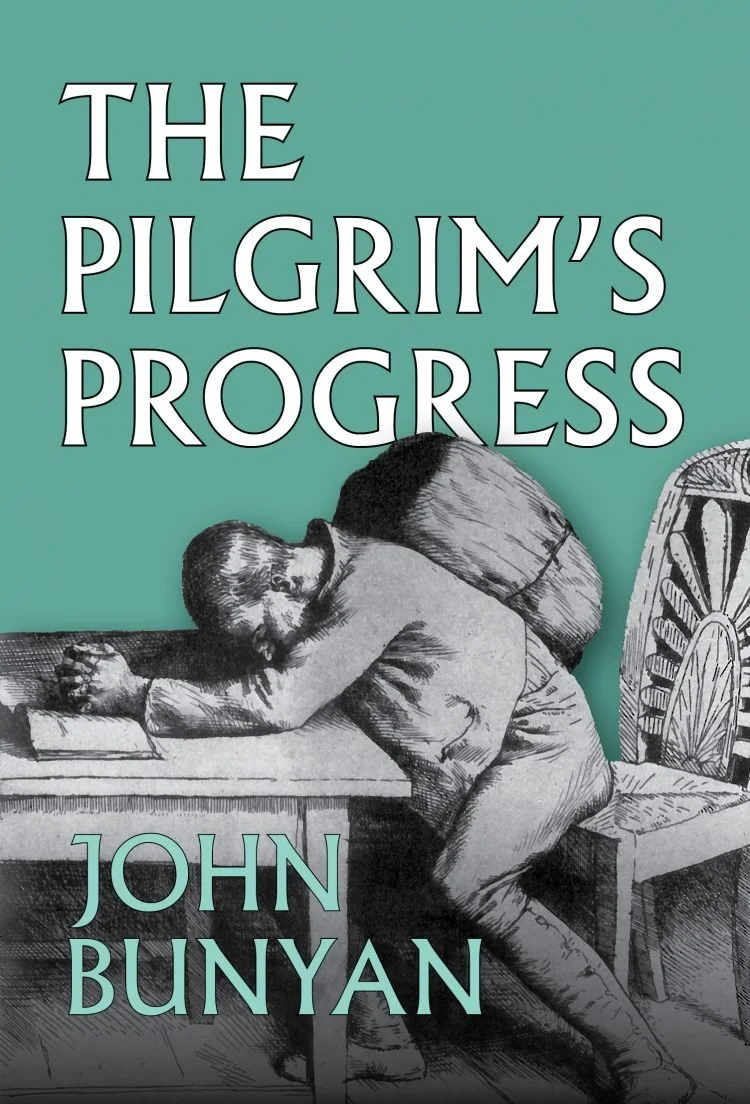
Notes on *The Pilgrim’s Progress*
The Pilgrim’s Progress, John Bunyan, 1678, (Banner of Truth)
Note-taker’s Preface: John Bunyan’s classic, The Pilgrim’s Progress, is a book unlike any other. Originally published in 1678, it has sold more than any other book in the English language at around 250 million copies. It’s popularity is due to its profundity. The relevance of Bunyan’s allegory for Christian discipleship, even so many years removed from when he wrote, is simply stunning. I hope that these notes can be a quick-reference guide to some key parts of the story, and that you can consult these notes for illustration helps. My personal goal is to eventually be so acquainted with the novel that I can use Christian”s journey as a field guide for my own, and for those I shepherd.
Lastly, my favorite edition of the book is a recent release from Banner of Truth. It is an elegant, 7x5 hardcover with the original etchings by William Strang.
Interaction
"The two children: Patience and Passion" (28)
"The fire burns hotter and brighter" (30)
"At the Palace Beautiful = the local church" (46)
"The effect of Christian fellowship." (58)
"How the church's fellowship builds us up" (58)
"Would that this be enough for my rest!" (62)
"Faithful is murdered by the jury in Vanity Fair." (110)
"After the death of Faithful, Hopeful steps up to befriend Christian." (112)
"Christian and Hopeful mutually encourage one another, each for the other at different times." (158)
"What a sinner's prayer!" (164)
Characters
Part I
Christian
Husband and father stricken by spiritual crisis. Christian is told by a messenger to leave his doomed city and begin a journey of progress toward spiritual achievement.
Evangelist
The messenger carrying the Gospel, or word of Christ, to Christian. Evangelist spurs Christian on his journey to the Celestial City.
Obstinate
A neighbor of Christian’s in the City of Destruction who refuses to accompany him.
Pliable
A neighbor of Christian’s who accompanies him for a while. After falling in the Slough of Despond, Pliable is discouraged and returns home, only to be mocked by the townsfolk.
Help
Fellow pilgrim who helps pull Christian from the Slough of Despond.
Worldly Wiseman
A reasonable and practical man whom Christian encounters early in his journey. Worldly Wiseman tries unsuccessfully to urge Christian to give up his religious foolishness and live a contented secular life.
Formalist
A traveler whom Christian meets along the wall of Salvation. With his companion Hypocrisy, Formalist sneaks over the wall, instead of following the strait and narrow as Christian did.
Hypocrisy
Formalist’s travel companion.
Discretion
One of the four mistresses of the Palace Beautiful. Discretion takes Christian in and feeds him.
Piety
One of the four mistresses of the Palace Beautiful. Piety asks Christian about his journey so far.
Prudence
One of the four mistresses of the Palace Beautiful. Prudence tries to understand Christian’s purpose in traveling to Mount Zion.
Charity
One of the four mistresses of the Palace Beautiful. Charity asks Christian why he did not bring his family, which causes him to weep.
The Interpreter
Spiritual guide who shelters Christian. The Interpreter instructs Christian in the art of reading religious meanings hidden in everyday objects and events, which he houses in his Significant Rooms.
Apollyon
Fierce monster with fish scales, bear feet, and dragon wings. Apollyon threatens Christian and fights him with sword until Christian defeats him.
Shining Ones
Three celestial creatures who clothe Christian with new garments and give him the certificate. The Shining Ones act as guardians throughout Christian’s journey.
Faithful
Fellow pilgrim from Christian’s hometown who reports on the city they both left behind. Faithful loyally accompanies Christian until he is executed in the town of Vanity for the crime of disrespecting the local Satan-worshipping religion.
Talkative
Fellow pilgrim who travels alongside Christian and Faithful for a while. Talkative is spurned by Christian for valuing spiritual words over religious deeds.
Mr. By-ends
A user of religion for personal ends and social profit. Mr. By-ends accompanies Christian briefly after Christian escapes from Vanity.
Hopeful
Pilgrim who replaces Faithful as Christian’s travel companion and confidant after leaving Vanity, all the way to the Celestial City. Hopeful saves Christian’s life in the river before the gates to Mount Zion.
Giant Despair
Master of the Doubting Castle. Giant Despair imprisons Hopeful and Christian for trespassing on his domain and is later killed by Great-heart and Christiana’s sons.
Diffidence
Giant Despair’s wife. She encourages the harsh punishment of Hopeful and Christian in the Doubting Castle.
Demas
Gentlemanly figure who tries to entice Christian and Hopeful with silver and dreams of wealth.
Temporary
A would-be pilgrim whom Christian speaks of in a cautionary way, warning of Temporary’s backsliding before his spiritual progress was complete.
Part II
Sagacity
An elderly man who visits the narrator in his dream. After the narrator asks after Christian’s family, Sagacity offers to take the narrator’s place as the storyteller and recount Christiana’s journey.
Christiana
Christian’s wife and the titular pilgrim in Part II. As a spiritual voyager and a guide to her children, Christiana shows remarkable strength and resilience on the journey.
Mercy
Christiana’s neighbor employed by her as a servant on her pilgrimage. She later marries Matthew, Christiana’s eldest son.
Matthew
Christiana’s eldest son, who eventually marries Mercy. After stealing fruit from the devil’s garden, Matthew must be healed by Dr. Skill.
Joseph
A son of Christiana.
Samuel
A son of Christiana.
James
Christiana’s youngest son.
Ill-Favored Ones
Two strangers who attempt to harm Christiana and Mercy.
Reliever
Fellow pilgrim who rescues Christiana and Mercy from the two Ill-Favored Ones.
Mr. Great-heart
The Interpreter’s manservant. He protects and guides Christiana and Mercy on their way up the hill of Difficulty and toward the House Beautiful.
Watchful
Porter of the House Beautiful.
Grim
Master of the lions, who threatens Christiana and Mercy on their way to the House Beautiful.
Maul
A giant killed by Great-heart. He accuses Great-heart of kidnapping the pilgrims.
Mr. Brisk
Mercy’s suitor. He ends their affair because she is too involved in charity work.
Old Honest
An elderly pilgrim. While accompanying Christiana and her group, he relates the sad demise of the pilgrim Fearing.
Mr. Fearing
A pilgrim who accompanies Honest for some time. Mr. Fearing is courageous in the face of physical danger but insufficiently certain about his desire to reach the Celestial City.
Gaius
A homeowner and host who welcomes Christiana and her group. Two of Gaius’s daughters marry two of Christiana’s sons.
Giant Good-Slay
A giant slain by Gaius, Great-heart, and others. He almost devours the pilgrim Feeble-mind.
Heedless
A pilgrim who falls asleep near the end of his pilgrimage and talks in his sleep, showing his basic failure to understand pilgrimage.
Too-bold
Heedless’s cohort.
Madam Bubble
A tall, attractive, dark-skinned temptress. Madam Bubble offers Standfast herself and her money if he will stay with her.
Standfast
The last pilgrim met by Christiana. Standfast is found kneeling on the ground and praying in thanks for having been delivered from the temptation of Madam Bubble.
Mr. Feeble-Mind
A mentally slow pilgrim captured and nearly killed by the giant Good-Slay. Mr. Feeble-Mind is rescued by Gaius and joins Christiana’s group of pilgrims.
Mr. Ready-to-Halt
A handicapped pilgrim who joins Christiana’s group on crutches.
Mr. Mnason
Pilgrim with whom Christiana’s group lodges. Two of Mnason’s daughters are married off to Christiana’s sons.
Contrite
Friend of Mnason’s, who says that the locals feel a burden of guilt after the unjust execution of Christian’s friend Faithful.
Valiant-for-truth
A strong, sword-wielding pilgrim. Valiant-for-truth drives off three attackers single-handedly and joins Christiana’s group at the end of their journey.
Favorite Quotes by Chapter
The Author's Apology for His Book
"Which way it pleases God: For who knows how, Better than he that taught us first to Plough, To guide our Mind and Pens for his Design? And he makes base things usher in Divine." (xiii)
Part I: The Pilgrim's Progress: in the similitude of a dream
"I dreamed, and behold I saw a Man clothed with rags, standing in a certain place, with his face from his own house, a Book in his hand, and a great Burden upon his back." (1)
"So I saw in my dream that the Man began to run; Now he had not run far from his own door, but his Wife and Children perceiving it, began to cry after him to return; but the Man put his fingers in his ears, and ran on crying, Life! Life! Eternal Life! So he looked not behind him, but fled towards the middle of the Plain." (5)
"World. Wilt thou hearken to me if I give thee counsel? Chr. If it be good, I will; for I stand in need of good counsel." (13)
"Chr. Why, Sir, this Burden upon my back is more terrible to me, than are all these things which you have mentioned" (14)
"The man that met thee, is one Worldly-Wiseman, and rightly is he so called; partly, because he savoureth only the doctrine of this world; (therefore he always goes to the town of Morality to church) and partly, because he loveth that doctrine best; for it saveth him from the Cross; and because he is of this carnal temper, therefore he seeketh to pervert my ways, though right." (18)
"So he had him into a private room, and bid his man open a door; the which when he had done, Christian saw the picture of a very grave Person hang up against the wall; and this was the fashion of it, It had eyes lifted up to Heaven, the best of Books in his hand, the Law of Truth was written upon his lips, the World was behind his back; it stood as if it pleaded with men, and a Crown of Gold did hang over its head." (26)
"The man whose picture this is, is one of a thousand; he can beget children, travel in birth with children, and nurse them himself when they are born. And whereas thou seest him with eyes lift up to Heaven, the best of Books in his hand, and the Law of Truth writ on his lips; it is to shew thee, that his work is to know and unfold dark things to Sinners; even as also thou seest him stand as if he pleaded with men; and whereas thou seest the World as cast behind him, and that a Crown hangs over his head; that is to shew thee, that slighting and despising the things that are present, for the love that he hath to his Master's service, he is sure in the World that comes next, to have Glory for his reward." (26-27)
"Chr. Then said Christian, Now I see that Patience has the best Wisdom, and that upon many accounts. 1. Because he stays for the best things. 2. And also because he will have the Glory of his, when the other has nothing but rags." (29)
"The Interpreter answered, This is Christ, who continually with the Oil of his Grace maintains the work already begun in the heart: By the means of which, notwithstanding what the Devil can do, the souls of his people prove gracious still. And in that thou sawest, that the Man stood behind the wall to maintain the Fire; this is to teach thee, That it is hard for the Tempted to see how this Work of Grace is maintained in the soul." (30-31)
"Then was Christian glad and lightsome, and said with releases us of our Guilt and a merry heart, He hath given me Rest by his Sorrow, and Burden, we Life by his Death. Then he stood still a while to look and wonder; for it was very surprising to him, that the sight of the Cross should thus ease him of his Burden. He looked therefore, and looked again, even till the springs that were in his head sent the waters down his cheeks." (38)
"Chr. I walk by the Rule of my Master, you walk by the rude working of your fancies." (40)
"Sometimes he sighed, sometimes he wept, and oftentimes he chid himself for being so foolish to fall asleep in that place which was erected only for a little refreshment from his weariness." (45)
"Fear not the Lions, for they are chain'd, and are placed there for Trial of Faith, where it is, and for Discovery of those that have none: Keep in the midst of the Path, and no hurt shall come unto thee." (47)
"Piety. But did you not come by the House of the Interpreter? Chr. Yes, and did see such things there, the remembrance of which will stick by me as long as I live: Especially three things, to wit, How Christ, in despite of Satan, maintains his Work of Grace in the heart; how the Man had sinned himself quite out of hopes of God's Mercy; and also the dream of him that thought in his sleep the Day of Judgment was come." (50)
"Prud. Can you remember by what Means you find your annoyances at times, as if they were vanquished? Chr. Yes, when I think what I saw at the Cross, that will do it; and when I look upon my 'broidered Coat, that will do it; also when I look into the Roll that I carry in my bosom, that will do it; and when my thoughts wax warm about whither I am going, that will do it." (52)
"The name of the chamber was Peace, where he slept till break of Day, and then he awoke and sang,
Where am I now! Is this the Love and Care
Of Jesus; for the men that Pilgrims are,
Thus to provide! That I should be forgiven,
And divel already the next door to Heaven!" (56)
"Whilst Christian is among his godly friends, Their golden mouths make him sufficient 'mends For all his griefs; and when they let him go, He's clad with northern steel from top to toe." (58)
"Chr. All this is true, and much more, which thou hast left out; but the Prince whom I serve and honour, is merciful and ready to forgive: But besides, these Infirmities possessed me in thy Country; for there I sucked them in, and I have groaned under them, been sorry for them, and have obtained Pardon of my Prince." (62)
"And I thought again, this Shame tells me what men are; but it tells me nothing what God or the Word of God is. And I thought moreover, That at the Day of Doom we shall not be doomed to Death or Life, according to the hectoring spirits of the world, but according to the Wisdom and Law of the Highest. Therefore, thought I, what God says, is best, though all the men in the world are against it: Seeing then that God prefers his Religion; seeing God prefers a tender Conscience; seeing they that make themselves fools for the Kingdom of Heaven, are wisest; and that the poor man that loveth Christ, is richer than the greatest man in the world that hates him; Shame, depart, thou art an Enemy to my Salvation; shall I entertain thee against my Sovereign Lord? How then shall I look him in the Face at his Coming? Should I now be ashamed of his Ways and Servants, how can I expect the blessing?"(82)
"Faith. Oh! a great deal: A man may cry out against Sin, of Policy, but he cannot abhor it but by virtue of a godly antipathy against it. I have heard many cry out against Sin in the Pulpit, who yet can abide it well enough in the Heart, House, and Conversation." (91)
"They therefore brought him out, to do with him according to their Law; and first they scourged him, then they buffeted him, then they lanced his flesh with knives: after that they stoned him with stones, then pricked him with their swords; and last of all, they burnt him to ashes at the Stake. Thus came Faithful to his end." (110)
"Now I saw in my dream, that Christian went not forth alone; for there was one whose name was Hopeful, (being made so by the beholding of Christian and Faithful in their words and behaviour, in their sufferings at the Fair) who joined himself unto him, and entering into a brotherly covenant, told him, that he would be his companion. Thus one died to make testimony to the Truth, and another rises out of his ashes to be a companion with Christian in his Pilgrimage." (112)
"Hope. My Brother, said he, remembrest thou not, how valiant thou hast been heretofore?" (135)
"Hopeful comforts him again by calling former things to remembrance." (135)
"Now, a little before it was Day, good Christian, as one half amazed, brake out in this passionate speech; What a Fool, quoth he, am I, thus to lie in a stinking dungeon, when I may as well walk at liberty? I have a key in my bosom, called Promise, that will I am persuaded open any lock in Doubting-Castle. Then said Hopeful, That's good news, good brother, pluck it out of thy bosom and try." (136-137)
"Let us lie down here, and take one nap. Chr. By no means, (said the other) lest sleeping we never awake more." (158)
"Hope. Another thing that hath troubled me even since my late amendments is, that if I look narrowly into the best of what I do now, I still see Sin, new Sin, mixing itself with the best of that I do; so that now I am forced to conclude, that notwithstanding my former fond Conceits of myself and duties, I have committed Sin enough in one duty to send me to Hell, tho' my former life had been faultless." (162)
"God be merciful to me a Sinner, and make me to know and believe in Jesus Christ; for I see, that if his Righteousness had not been, or I have not Faith in that Righteousness, I am utterly cast away. Lord, I have heard that thou art a merciful God, and hast ordained that thy Son Jesus Christ should be the Saviour of the World; and moreover, that thou art willing to bestow upon such a poor sinner as I am, (and I am a sinner indeed) Lord, take therefore this opportunity, and magnify thy Grace in the Salvation of my soul, through thy Son Jesus Christ. Amen." (164)
"Now I further saw, that betwixt them and the Gate was a River, but there was no bridge to go over, and the river was very deep."(181)
"They then addressed themselves to the Water, and entering, Christian began to sink, and crying out to his good friend Hopeful, he said, I sink in deep Waters; the Billows go over my head, all the Waves go over me. Selah. Then said the other, Be of good cheer, my Brother, I feel the bottom, and it is good." (182)
"Then I saw in my dream, That Christian was as in a muse a while. To whom also Hopeful added these words, Be of good cheer, Jesus Christ maketh thee whole: And with that Christian brake out with a loud voice, Oh, I see him again! and he tells me, When thou passest through the Waters, I will be with thee; and through the Rivers, they shall not overflow thee. Then they both took courage, and the Enemy was after that as still as a stone, until they were gone over." (184)
"Now, just as the Gates were opened to let in the men, I looked in after them; and behold the City shone like the Sun, the streets also were paved with Gold, and in them walked many men with Crowns on their heads, Palms in their hands, and Golden Harps to sing praises withal." (188)
Part II: The Pilgrim's Progress: from this world to that which is to come
"Then said the Visiter, Christiana! the Bitter is before the Sweet. Thou must through Troubles, as did he that went before thee, enter this Celestial City." (210)
"The Bitter must come before the Sweet, and that also will make the Sweet the sweeter."
"Rel. It is not always necessary to grant things not asked for, lest by so doing, they become of little esteem; but when the Want of a thing is felt, it then comes under, in the eyes of him that feels it, that estimate, that properly is its due, and so consequently will be hereafter used." (230)
"the Interpreter takes them apart again, and has them first into a room, where was a Man that could look no way but downwards, with a muckrake in his hand: There stood also one over his head, with a Celestial Crown in his hand, and proffered to give him that Crown for his muckrake; but the man did neither look up, nor regard, but raked to himself the straws, the small sticks, and dust of the floor."(234)
"Give me not Riches, is scarce the prayer of one of ten thousand. Straws and sticks, and dust, with most, are the great things now looked after." (236)
"It was fine Linen white and clean. When the women were thus adorned, they seemed to be a terror one to the other; for that they could not see that Glory each one on herself, which they could see in each other. Now therefore they began to esteem each other better than themselves. For you are fairer than I am, said one; and you are more comely than I am, said another."
"Pilgrims should watch, and remember what they have already received under their greatest enjoyments; but for want of doing so, ofttimes their rejoicing ends in tears, and their sun-shine in a Cloud." (258)
"Jos. That Sin is so great and mighty a Tyrant, that none can pull us out of its clutches, but God; and that God is so good and loving to Man, as to pull him indeed out of this miserable state. Prud. What is God's design in saving of poor men? Jos. The glorifying of his Name, of his Grace, and Justice, and the everlasting Happiness of his Creature." (268)
"Pray how fareth it with you in your Pilgrimage? (331)
"Hon. It happens to us, as it happeneth to wayfaring men; sometimes our Way is clean, sometimes foul; sometimes up hill, sometimes down hill; we are seldom at a certainty: The wind is not always on our backs, nor is every one a Friend that we meet with in the Way. We have met with some notable rubs already; and what are yet behind we know not; but for the most part we find it true, that has been talked of of old: A good man must suffer trouble."(331)
"My marks and scars I carry with me, to be a witness for me, that I have fought His battles, who now will be my Rewarder." (373)
"The waters indeed are to the palate bitter, and to the stomach cold; yet the thoughts of what I am going to, and of the conduct that waits for me on the other side, doth lie as a glowing coal at my heart." (375)
"I heard one say, that they were yet alive, and so would be for the increase of the Church in that place where they were, for a time." (376)
Notable Content
Four Reasons for Backsliding (176-178)
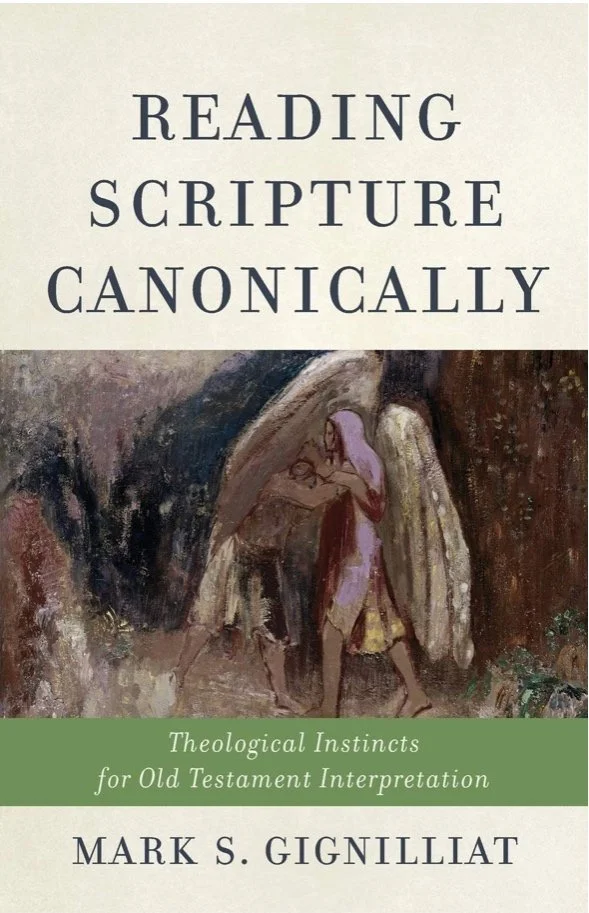
Notes on *Reading Scripture Canonically*
Reading Scripture Canonically: Theological Instincts for Old Testament Interpretation, Mark S. Gignilliat, (Baker Academic, 2019)
Main Idea/Takeaway
How and why should we read the material of Scripture — words, sentences, paragraphs, books, and so forth — in conjunction with Scripture's theological subject matter? (xiv)
Interaction
"Has Sailhamer (JS) described this best in his Old Testament theology on text vs. event"? (15)
"Revelation is in the text." (18)
"Note how JS places canonical reading along criticisms" (21)
"Not less than historical, but absolutely more, and when understood as witness, the question on what to preach is clear. Final form!" (31)
"In short, the canonical approach places highest focus on the text as God has given it to us. And we should preach this way!" (31)
"LXX as a kind of commentary." (71)
"Yes, only because we know that God is the ultimate author of Scripture." (94)
"Intertextuality- relationship between various books of OT; Innertextuality- book's own textual composition; Contextuality- final shape of canon" (100)
"See Michael Reeves, 'Delighting in the Trinity.'" (101)
"But does YHWH 'reveal' himself 'personally' if no particular person should be in view. (see fn.29)" (112)
"We believe God is the ultimate author of Scripture." (113)
"We believe the Bible is ultimately about God and is by God." (113)
"Instincts and Expectations." (116)
"Sounds like reader-determinate meaning which is a slippery slope?! How does this not also open us up to reader response? The answer it seems, is Scripture's subject matter, God. That he is the ultimate author. KJV speaks of canonical fittingness." " (97)
Table of Contents
Introduction
Part 1: Scripture's Material Form
I. Scripture and Canon
II. Sanding with the Grain: Final Form and Canonical Shape
III. Canonical Intentionality
IV. Canon and Textual Criticism: The Search for the Christian Bible
Part 2: Scripture's Subject Matter
V. God as Triune, and Exegetical Metaphysics
VI. The Trinity and the Old Testament
Epilogue
Favorite Quotes by Chapter
Introduction
"The posture, expectations, and (dreaded word) "methods" that one brings to the Holy Scripture will either serve or obstruct Scripture's reason for existence." (xii)
"The New Testament authors and early church theologians read the Old Testament as a Christian witness. This kind of reading instinct and strategy has always been with the church."(xii)
Part 1: Scripture's Material Form
I. Scripture and Canon
"A "canon consciousness" is actually embedded in the literature itself, and it exerted pressure on various religious bodies in the creaturely act of canonization or the forming of set lists." (7)
"While the human and institutional agents attached to the writing, editing, and preserving of the biblical books should never be diminished, Christians around the world today and from the church's inception dive headlong into the Scriptures for the sake of hearing the word of God." (9)
"As this book hopes to demonstrate, the confession of faith regarding Scripture's nature (or ontology, "what it is") impinges on the interpretive approach taken. In other words, the subject matter being studied shapes the interpretive methods used to understand it." (10)
"God's self-determination to be a God in fellowship with humanity. On this account, Scripture is the loving gift of God to his people so they may continually seek him and order their lives toward him, while resting in the confidence that God has not left our desire to know him within the realm of human self-achievement." (11)
"As Webster puts the matter, "Holy Scripture is a function of God. Therefore, Holy Scripture's canonical role as the normative guide for Christian thought and life derives its authority from the loving rule of God. Its textual character remains a dynamic means of continued divine self-disclosure. It is not a static "textual deposit."(11)
"God as object and Scripture as approach are determinate within the redemptive economy for how God orders the goal and means of our theological pursuits." (12)
"The differentiated-though-fitting relationship between God and Scripture demands the church's continued giving of itself to the exegesis of Holy Scripture. Because Scripture is not God, while at the same time remaining a sanctified means for apprehension of God, it follows necessarily that the exegesis of Holy Scripture continues as a never-ceasing activity of Christ's church." (13)
"The prophetic word of God continues to effect repentance in the hearts of hearers around the world." (17)
"The cognitive principle of Scripture, with God as its object of inquiry, shapes the intellectual approach and method of inquiry. While all the elements of a humanly authored document are true of Holy Scripture, the ontological principle will not allow our method of reading to be hemmed in by its creaturely status." (18)
II. Sanding with the Grain: Final Form and Canonical Shape
"But because the canonical approach insists on the character of Israel's Scriptures as witness rather than source, the final form of the biblical text is the privileged form." (25)
"The problem with this newer redactional analysis is that under the guise of diversity the biblical text is subjected to the criteria of rigorous, conceptual coherence which has been defined according to modern rational categories." In other words, a modern account of conceptual coherence may be an imposition onto the authors and shapers of the biblical material." (36)
"Childs had no misgivings about the ends toward which critical tools are used: as an aid to hearing the final form of the text well. Childs's clarity on the goal of such critical utilization comes from his commitment to reading the Old Testament as witness to God's identity and ways with his people." (37)
"Christopher Seitz says it best when he identifies the canonical approach this way: "Canonical reading is therefore not an exact science, but a theological decision about what the proper parameters for interpretation are: the final form presentation and the arrangement and sequencing that it exhibits, over against the simple history of the text's development as this is critically reconstructed." (40)
III. Canonical Intentionality
"The canonical approach, on the other hand, conceives of intentionality more broadly as it identifies the authorial voice of the text with its final form, along with its privileged arrangement and deployment of texts, traditions, or prophetic oracles whose initial intention(s) may have had a more narrow range of effects. One could construe intentionality of this kind as "thick" rather than "thin." A thin account locates intentionality within a narrow frame of individual authorship. A thick account takes into view a providentially constructed understanding of history where a wide range of historical figures and inspired words are deemed relevant to the texts as they come to their full form. The term associated with this particular understanding is canonical intentionality?"(44)
"The recognition of the canon's intention, as a theological understanding of the text's ability, to render God's identity and will for future generations has exegetical warrant." (48)
"Does the canon expect its readers to come to it with a set of assumptions and anticipations about the text and the reading process? Can one decision about a reading strategy claim a superior status to others? The canonical approach, in accord with the received reading practices of the church, says yes. When believers read Israel's canon in the anticipation of hearing an authoritative word whose source is the communicative action of God, they read Scripture according to its own intention." (51)
"The glory of the Christian canon is its ability to do this kind of work continually in the life of Christ's church, requiring a robust doctrine of the Holy Spirit to fuel its fire."(55)
"The gap between text and interpreter is not bridged by more refined hermeneutical tools, helpful as these may be. The gap is bridged by a Person." (56)
"John Webster is right to claim, "Whether done well or ill, theology and the study of Scripture are spiritual tasks, and the conditions for their flourishing include spiritual conditions." (56)
IV. Canon and Textual Criticism: The Search for the Christian Bible
"If, however, Scripture functions canonically as the rule of faith for Christian life and doctrine despite questions at the margins regarding the canon's scope, then the settling of the canon's scope is not determinative of the canonical role that Scripture plays even when levels of uncertainty at the margins remain." (75)
V. God as Triune, and Exegetical Metaphysics
"Freewheeling hermeneutical reflections apart from the nitty-gritty details of textual engagement run counter to the material sufficiency of Scripture. Texts and their language matter. At the same time, biblical texts cannot be separated from their subject matter." (86)
"Modern biblical criticism is a rich and varied thing, whose results provide important avenues of inquiry and appreciation for Scripture's linguistic, poetic, and historical depth. But somewhere lurking in the shadows, or perhaps dancing in full view, is the historicist resistance to metaphysics as a critical tool for reading historical texts. Brian Daley does not dance around the issue when he claims that historical criticism often operates "methodologically atheistic." (89)
"When Isaiah or Moses or Jeremiah utter a prophetic word, do not their language and verbal expressions say more than they could grasp?" (93)
"Does the whole Christian canon as a two-Testament witness pressure us to see the Old Testament's subject as our Triune God, with the Tetragrammaton (the divine name YHWH) as best predicated on the essence of God revealed In the tripersonal naming of God as Father, Son, and Holy Spirit more of this in the next chapter)?" (93)
"Therefore, the prophetic word of the Old Testament is an extension of Yhwh's own revealed self, fitted as it is to the singularity of the divine being in tripersonal relation." (94)
"The source of the Bible's language is the infinite plenitude of the divine being, revealing himself by means of the Word's agency." (94)
VI. The Trinity and the Old Testament
"Moreover, if as Christians we affirm the triune character of our God, then a question regarding the identity of Yhwh in the Old Testament follows. Is Yhwh a persona of the divine essence or the ousia itself? Put in other terms, is Yhwh the Father or the divine essence of three personae?" (101)
"Yhwh's proclamation of his own name is the revelation of his glory. The thirteen middot (attributes) of God listed by Yhwh himself (34:6-7) reveal the character of the divine name and in so doing reveal the character of Yhwh." (106)
"Yhwh's mission to create and redeem does not exhaust the scope of God's being. As various episodes within the Old Testament attest, the being of God resists domestication of any sort."(107)
Epilogue
"The church's long-term health and faithful witness rests on its commitment to seeking after God's Word in Holy Scripture. Of course, other ecclesial matters are important. But a doctrine of Scripture's sufficiency means that the church's access, to what gives it life, the person and work of Jesus Christ, is through the front doors of Holy Scripture." (115)
"Still, it is the open Bible that sustains and energizes every component of pastoral ministry and, for that matter, Christian existence. People need Jesus. And Jesus Christ stands at the door of his own Word and knocks." (117)
Notable Content
Defining Terms. (6)
Canon and Scripture Ontology. (10)
The Canonical Approach in Modern Guise:
"While drawing on the resources and instincts of the church's premodern reading of Scripture, the canonical approach makes judicious use of modern criticism's literary engagement with the text's compositional history. The key term is judicious because the canonical approach makes appreciative use of critical tools while at the same time resisting modern criticism's interpretive goals and methodological hegemony." (25)
Textual Final Form:
"The final form also leaves an interpretive imprint on the text, rendering the whole as more than the sum total of its parts; it is the culmination of God's revealed word in time, and renders an authoritative frame of reference for the parts leading to the whole--a witness to God's revelation rather than a source for critical reconstruction." (27)
Canonical Intentionality:
"The canonical approach conceives of the text's intentionality in the authorial voice of the text's final form. While the religiohistorical phenomena producing the various canonical voices are not denied, the canonical approach understands the text's intentionality as "loosened" from these historical forces for the sake of an enduring witness to divine self-revelation." (46)
See John Sailhamer categories. (48)
Textual Pluriformity/Uniformity:
"The plethora of text and text types discovered in the twentieth century complicates the text-critical pursuit of an "original" Old Testament text. A standard view of the Old Testament's textual history is that a pluriform text type--multiple and divergent texts and text types-in time yielded to a uniform text associated with rabbinic Judaism of the era after AD 70. This chapter makes a different claim: uniformity and pluriformity existed on parallel historical tracks, rather than pluriformity leading genetically into uniformity." (63)
Hebrew or Greek or Both?:
"The translations of the Hebrew Scriptures into Greek remain a significant historical and theological phenomenon. Undoubtedly the Septuagint (LXX) played a formative role in the shaping of the New Testament and early Christianity. The evidence suggests that this historical accident tells much about the translatability of the Old Testament, but it does not necessarily place the Septuagint translation above its Hebrew parent text." (76)
Fixity:
"The verbal character of the Old Testament in its literal sense opens up to the future: much like the literal sense of Cézanne's life opens up to the future of his work. Yet in this opening up, the Old Testament's "life" or literal sense or given verbal form is not left behind for greener New Testament pastures. As Cézanne's paintings provide a necessary entry point to the fixity of his life, so too does the trinitarian subject matter of Scripture provide an entry point to the fixity of the Old Testament's verbal character." (98)

Notes on *The Art of Pastoring*
The Art of Pastoring, David Hansen, (IVP, 1994, 2012)
Main Idea/Takeaway
Pastors are called to be parables of Jesus — people meet Jesus in our lives when we follow Jesus.
"I attempt to describe why it is that people meet Jesus in our lives when we follow Jesus. Even more, I have attempted to describe how and why following Jesus is the central principle of pastoral ministry, the comprehensive principle that integrates every task." (13)
"The thesis of this book is that people meet Jesus in our lives because when we follow Jesus, we are parables of Jesus Christ to the people we meet." (13)
"Here's what the pastoral ministry is for me: Every day, as I go about my tasks as a pastor, I am a follower of Jesus, I am therefore a parable of him to those I encounter. The parable of Jesus works the power and presence of Jesus in their lives." (31)
"Pastors who are parables of Jesus Christ change people's minds about Christ and bring the real Christ to people." (145)
Interaction
I pray petitionary and intercessory prayers because that grace of God at work within me leads me to desire things I cannot create. God's grace at work in me causes me to want to see things happen that I can't make happen. So I ask him to. (114)
Difference between parable and symbol. (143)
Table of Contents
I. Beginning
II. Call
III. The Holy Spirit
IV. Temptation
V. Eschatology
VI. Preaching
VII. Prayer
VIII. Friendship
IX. Sacrament
X. Leadership
XI. Leaving
XII. Reward
Favorite Quotes by Chapter
I. Beginning
"Better to be a follower of Jesus and no expert at that, just a sinner saved by grace, called to love because I have been bought with a price." (22)
"Pastoral ministry must be following Jesus Christ. Jesus Christ called me to this work, and following him must be integral to realizing his calling." (22)
"The speakability of God: this is what I want my life to be, a living organism through which God speaks, Not a hero, but a regular guy working away at imitating Christ in my everyday life." (26)
"My shepherding is an authentic extended metaphor of the Good Shepherd. And as such, my life conveys the surprising presence of the grace of God." (27)
"But if Jesus is communicated through us because of the likeness we share with him in our everyday life, if the essence of delivering Christ is living like him in our whole life, matching our life's narrative with his life's narrative, then our everyday life counts." (29)
"An adequate definition of pastoral ministry emphasizes following Jesus as the act of ministry, and particularly following Jesus on the way of the cross." (29)
"Sexual sin gets the press, but ego press kills the church." (30)
II. Call
"The gospel is the power of the love of God, and as such it gives the pastor the power of the love of God to give to others. If the gospel is the pastor's bread, the pastor will always have bread to give away." (41)
IV. Temptation
"I've tried and tried, but I've never been able to mix ambition and love. When I'm trying to be important and I'm plotting my way to the top, I can't love my wife, I can't love my kids, I can't love my friends, I can't love my parishioners. When I'm climbing ladders I cut myself off from the power of the pastoral ministry, which is love. For me to love, for me to follow Jesus, I need to step off the ladder." (76)
"In our hypertherapeutic milieu, people want professionals to do something to them to make them feel better. Living through life, meeting the demands of following Jesus, living under the lordship of a holy God doesn't appeal to the general public these days." (78)
"Pandering is a moral problem. We pander to people's desires for shortcuts because we don't want to walk the Way of the Cross with them. We want shortcuts just as much as our people do." (82)
V. Eschatology
"If we can't teach our people where they go because we don't know ourselves, or if we feel that we cannot teach them what we really believe about heaven and hell, we are poor pastors." (85)
"The widespread lack of a coherent, biblical eschatology among preachers, and their unwillingness to teach it, leads to toothless, people-pleasing preaching." (86)
"All I see is people that need Christ. I see people in danger. I feel a fire light in my gut: the message God has given me for this morning is something the congregation needs to hear and respond to. Nervousness about my performance is displaced by concern for the people to hear the Word of God and believe in faith. I see their end. I see their need. I see that there is a decision to be made about Christ, and that decision counts for everything."(99)
VI. Preaching
"Preaching is a form of aggression. As we preach, Yahweh, the God of war, conducts holy war to conquer territory. The field of conflict is the human heart." (108)
"Thinking Christocentrically helps me sort through the side issues and leads me straight to the heart of every biblical text and the subject of all sermons: Jesus Christ." (111)
"This is what renews our hermeneutic: hearing Christ preached and taught by authors and preachers who are unafraid to tell us the truth. And that is the whole point of preaching: to tell the truth boldly and unashamedly." (112)
VIII. Friendship
"I'm gun-shy of people who like me too much."(137)
"They thank Jesus but give me the credit. Their speech is think with spiritual lingo, but they treat me like I'm their savior. I don't think they're talking about me or Jesus. They're talking to someone or something I symbolize to them. Psychologists call this transference." (137)
"What must die in every pastor is the subconscious desire to please people. What must not die is the will to love. There's the risk."(140)
"There are intelligent steps the pastor can take to avoid the snare. Don't try to be a therapist. When pastors try to be therapists, the danger intensifies."(142)
"But pastors should never, under any circumstances, attempt to create or enhance transference reactions in parishioners. They do happen, and they can have happy endings, but they should be avoided. The happy endings are rare." (143)
"How can a pastor be a parable of Christ and not a symbol of God? There is a critical difference between symbols and parables: symbols are durable, parables are impermanent." (145)
"Pastors, as parables of Jesus, bring Christ to people and then as quickly as possible become unimportant, unnecessary and superfluous to the important thing: the parishioners' relationship with Jesus." (146)
"Rather, pastors need to allow their personal effect on people to be powerful, but light-handed and brief. This is what it means for a pastor to be humble. Humble pastors don't hang around for adulation, for then they might become an idol. Becoming an idol is the greatest fear of the humble pastor."(146)
IX. Sacrament
"Sin is not a mistake. Our sin is our willing unlawfulness, our purposeful breaking of God's law. In attitude and in deed, we rebel against God, and we have for that reason forfeited our right to live. We deserve to die for our sins. That's what the death of Jesus is for; our deliberate unlawfulness." (158)
"God's love is not a theory, nor does it meet an abstract need. God's love is a factual, historic action: the death of Jesus Christ. The purpose of God's act of love is to meet our real need, the forgiveness of our sins." (159)
X. Leadership
"Jesus Christ is the object of proclamation. Preaching our visions and ideas for the church is cheap leadership, and it is not preaching. But biblical, Christocentric preaching is powerful pastoral leadership." (168)
"A good sermon is like the breakfast the risen Christ prepared for his bone-weary disciples, fish cooking on coals, and bread." (168)
"Preaching clever ideas, church programs, politics and heart warming stories is thin soup. But bringing the Word of God faithfully to people week after week is a gourmet feast, good to taste and good for the soul. Christians who hear good preaching learn to "taste and see that the LORD is good" (Ps. 34:8). They develop a taste for the Word. They love to hear the Word of God, thoughtfully prepared, lovingly presented." (169)
"Whereas the sermon divided the church into individuals, the sacraments unite individuals with the body of Christ." (175)
"It is simple insight that the traditions of Christianity that place heavy stress on the sacraments tend to view individuals from the perspective of the unity of the church, while the traditions of Christianity that place heavy stress on preaching tend to view the church as a collection of individual disciples."(176)
XII. Reward
"It's just plain true that the more our world values autonomy and self-realization, the more discouraged and defeated we pastors have become. The more the world around us becomes its own eschaton, the less we will be understood and appreciated for what we do. And to the extent that we pastors accept the world's stance and attempt to become our own destinies through autonomy, the more we will despise our call and demand satisfaction now for our efforts. That's when we start trying to make stones into bread." (195)
Notable Content
"Reading the text in its original language accomplishes two vital things. Looking at the text in its original tongue is another way to fiddle with it. It is a way of spending unhurried, inefficient time with the text. It forces me to slow down and listen more intently." (104)
"Whereas morning prayer is praying the Psalms, wandering prayer is praying like the Psalms." (118)
Chapter 8 delves into the topic of transference. This is one of the most important treatments of this topic I’ve read in regards to pastoral ministry, and it is extremely relevant, especially for younger pastors (129)
"A pastor is not a symbol of God. A pastor is a parable of Jesus Christ." (143)
"But the sacraments, whose responsibility is to unite us, become a definite threat to the unity of the church if they are celebrated willy-nilly in small groups." (178)

Notes on *Hearers and Doers*
Hearers and Doers: A Pastor's Guide to Making Disciples Through Scripture and Doctrine, Kevin J. Vanhoozer, (Lexham Press, 2019)
Main Idea/Takeaway
Pastors must be theologically rooted to help church members recover the primacy of Scripture in their discipleship.
"Hearers & Doers is intended to help pastors fulfill their Great Commission to make disciples, with emphasis on the importance of teaching disciples to read the Scriptures." (Preface xi)
"My hope is that the present book will help pastors recover Calvin's vision for theology as a help to reading the Bible in ways that enliven and encourage disciples to walk its way of wisdom." (Preface xxii)
"To make disciples is to teach people how to become biblically literate so they can be effective inhabitants and representatives of the city of God, for the purpose of gospel citizenship." (71)
"Accordingly, this book is a guide for hearing and reading the Bible rightly, as well as a training manual for doing the Bible rightly. The goal is to train disciples to walk around in the strange new world of the Bible even as they live in the familiar old world of the present. It is a pastor's guide for training hearers and doers, faithful followers of Jesus Christ and faithful interpreters of the Word that directs us in his Way." (71)
"I want to examine the significance of sola Scriptura in making disciples by stressing its role in fostering the Christocentric social imaginary that makes the church a creature of the word." (99)
"A pastor does many things, but I have argued that most of these things are forms of ministering God's word: either by speaking (preaching, teaching, counseling, praying) or enacting it (celebrating the Lord's Supper, visitation). The particular focus of the present work has been on the pastor as disciple-maker, or what I have described elsewhere as "public theologian"- one who does theology with and for people." (241)
Interaction
Social imaginary = deep assumptions. (8)
The negative task of theology. (9)
What other words are shaping our people? (50)
Pastors minister by helping people make connections in three key areas. (117)
What is a pastor-theologian? (123)
If we don't mature immature Christians into real disciples, who will? The church is where this must happen. This goes for all 'immature Christians' that make up a congregation. The consumers, the feminists, etc. Where do they go to become disciples? It must be the church. And so the stronger brothers must bear with the failings of the weak. (Romans 15:1)." (125)
Preach the Bible; baptism and Lord's Supper; and people are not part of the church who shouldn't be. (127)
This is our consumer culture, which is not 1 Timothy 6:8. (146)
Credo-Baptism see p.218. (150)
Lord's Supper see p.221. (151)
"The church is most itself at Table." (221)
Table of Contents
Introduction
Part One: Warming Up: Why Discipleship Matters
I. The Role of Theology in Making Disciples
II. Whose Fitness? Which Body Image?
III. From Hearing to Doing
IV. Doctrine for Discipleship
Part Two: Working Out: How Discipleship Happens
V. Creatures of the Word
VI. Company of the Gospel
VII. Communion of Saints
VIII. Children of God
Favorite Quotes by Chapter
Introduction:
"In short: what it means to be biblical is inextricably related to what it means to be Jesus; disciples, and what form this discipleship should take in the twenty-first century." (xviii)
"Doctrine, like Scripture, teaches disciples who they are "in Christ." Disciples have to understand, and remember, whose Way they belong to." (xviii)
"Why should pastors study theology? So that they can better know whom they worship, and learn how to form others into true worshipers who know how to worship, and to walk, in spirit and truth (John 4:22-24)." (xxi)
"Theology is about learning how to live out Christ's life in us (Gal 2:20), a life that includes cruciform wisdom (1 Cor 2:2) and resurrection power (Phil 3:10)." (xxiii)
"The aim of evangelism is to make converts, people who believe the gospel, repent of their former way of life, a bonfire of the vanities, and face a new direction- Christward." (xxiv)
"Making disciples involves more (but not less) than informing minds or forming habits. It also involves transforming imaginations, that is, that primary ways they see, think about, and experience life." (xxv)
"The pastor must be a theologian: someone who can relate life in general, and the lives of his congregation, to what Scripture shows us the Father doing in Christ through the Spirit to renew creation." (xxvii)
Part One
Warming Up: Why Discipleship Matters
I. The Role of Theology in Making Disciples
"There is probably no more damaging picture distorting our present-day lives, and our understanding of the God of the gospel, than "love." Love is often depicted as a desire to be fulfilled (romanticism) or as accepting people for who they are (inclusivism) or as loyalty to one's own people group (tribalism)." (7)
" A social imaginary is the picture that frames our everyday beliefs and practices, in particular the "ways people imagine their social existence." The social imaginary is that nest of background assumptions, often implicit, that lead people to feel things as right or wrong, correct or incorrect." (8)
"The doctrines we hold be they philosophical, political, or theological, feel right or wrong, plausible or implausible, based largely on how well they accord with the prevailing social imaginary or world picture. What I have called above the "negative task" of theology is to critically reflect on the way in which the church embodies the prevailing social imaginaries of the day rather than the biblical imaginary- the true story of the Triune God is doing in the world." (10)
II. Whose Fitness? Which Body Image?
"Theology helps the church make disciples by exposing the lie- the false social imaginaries that often hold even church members captive (the negative, critical task) - and by redirecting them to the way, truth, and life of Jesus Christ (the positive, indicative task)." (14)
"Food cults arguably replace what religion once did by prescribing... food rules and rituals. Like religion, they provide meaning in confusing situations, giving us moral guidelines and comfort." (27)
"Pastors, too, ought to be concerned with the diet of their congregation, particularly if we stretch the term to include what kind of reading and entertainment church members imbibe on a regular basis."(42)
III. From Hearing to Doing
"Discipleship is about becoming who we are in Christ, and this is entirely a work of God: "Therefore, is anyone is in Christ, he is a new creation" (2 Cor 5:17)." (44)
"Discipleship is essentially a matter of hearing (authority), believing (trust), and doing the truth (freedom) that is in Jesus Christ." (50)
"As Dietrich Bonhoeffer put it: in discipleship, "Jesus is the only content." Disciples do the truth, then, by following his way and living out his life: "It is no longer I who live, but Christ lives in me" (Gal 2:20)." (52)
"To be a disciple is to hear, do, and adore what we see there, in the mirror of Scripture: the lordship of Jesus Christ." (53)
"True disciples are awake and alert to what is going on in the world, to what is really real, namely, the "real presence" of Jesus Christ. The true story of the world, narrated in Scripture, concerns God's presence and activity." (54)
"We agree that the imagination is a key factor in making disciples. Yet we become disciples not simply by participating in Christian liturgical practices but by participating in- living into and acting out- Scripture's canonical practices and, yes, Christian doctrine (see 1 Tim 4:16)." (56)
"To walk in the truth is to live in accordance with the truth of the gospel, that it, the truth of the new reality that has come into being in and through Christ's person and work." (59)
"Christian discipleship is companionship with Christ. The Christian Way is that of the long-distance walker, a long obedience in the same direction, where day in and day out, with each step we take, we choose to live in a way that follows Jesus and corresponds to the truth- our new life in him. Making disciples is a step-by-step process of helping men and women to walk the Way of Jesus Christ." (60)
IV. Doctrine for Discipleship
"Discipleship involves waking up to the realization that there is a choice, and we must stay awake to the lordship of Jesus Christ long enough to make the right one: to obey, and thereby to exercise, like Jesus, genuine freedom." (78)
"Feeding on God's word involves more than tasting or taking a bite; it means making a meal of it, digesting it. Eugene Peterson calls Christians to absorb and imbibe the Bible so that it seeps into all our pores." (79)
"Reading the Bible theologically, as teaching by God, of God, and leading to God, is our best hope for breaking free of the pictures that hold us captive: consumerism, humanism, transhumanism, nihilism, existentialism, moralism, scientism, and so on- idols all, of heart and mind. Reading Scripture theologically means reading it together, in the church, in ways that lead to its readers' moral and spiritual, and sapiential formation." (85)
Part Two
Working Out: How Discipleship Happens
V. Creatures of the Word
"Pastors must do everything they can to ensure that Scripture alone, and not some other story, serves as their congregation's essential social imaginary." (94)
"One such insight is that the church must always be "reforming" its thought and life in accordance with the Scriptures. In particular, the church must always be reforming in order to imagine the world that the Bible imagines." (95)
"The best way to take captive the imagination of Christians in any age is through the church's proclamation of the gospel in word and deed: in sermon, sacrament and shapes of everyday living." (103)
"The evangelical imagination alone opens up the real possibility of living along the grain of reality: according to what is really the case "in Christ." (110)
"As Ephraim Radner says, preaching "is a way of putting us back where we belong: into the text itself...where God's word, in all his creative omnipotence, does its work of self-giving and conformation." (115)
"Pastors minister this needed understanding by helping people make connections in three areas: between the parts of the Bible and the overarching story; between the Bible and the world in which they live; and between who they are at the moment and who God calls them to be in Christ." (117)
"The sermon is not a secondhand description of what is happening in a historical galaxy far, far, away. No, gospel preaching proclaims the true story of the world, acknowledging that all things are "from him and through him and to him" (Rom. 11:36). The sermon is the heavy artillery in the pastor-theologian's arsenal, and the best frontal assault on imaginations held captive by other stories promising other ways to the good life." (118)
"Scripture alone is the ultimate story from which disciples must take their existential bearings." (119)
"Pastors cannot know everything about everything, but they should be able to know one big thing about everything: whether or not it fosters life in Christ." (121)
"We read the Bible in order to discern the Way of truth and life that leads to fellowship with God and human flourishing from ways of falsehood and illusion that lead only to the dead end of idolatry and human frustration." (122)
"The pastor-theologian is a special kind of generalist a generalist who "specializes" in relating all things to the gospel of Jesus Christ in order to make disciples, especially by disciplining their imaginations to conform to the unified biblical narrative with Christ at its center." (123)
"It takes an imagination shaped by the Bible to see one's congregation as a living temple, with each member a living stone. (1 Peter 2:5)" (124)
"It takes a biblically formed eschatological imagination to look at a sinner and see a saint." (124)
VI. Company of the Gospel
"The church is the biblically mandated place to make disciples." (125)
"The Reformers also wrestled with the problem of how to recognize the tru church, and developed three criteria: the right preaching of the word, the right administration of the sacraments, and the proper exercise of discipline." (127)
"What pastors have to say that no one else can say is not simply that there is a God bu that God has acted. The gospel is a report of something that has been done. We have news- breaking news that the kingdom of God has broken into our world in the person and work of Jesus Christ. God has acted (creating news to report) and God has spoken (the news is reliable because those who reported it were inspired by God). (129)
"Christians today are living between the first and second comings of Jesus, in the closing scenes of Act IV, poised between memory and hope." (130)
"Doctrine does not add content to Scripture, but it does add understanding. Doctrine develops only because the church's understanding of the biblical story and its implications has developed, just as Jesus promised it would: "When the Spirit of truth comes, he will guide you into all the truth." (John 16:13)" (133)
"So how do we learn to get real? 'By reading Scripture theologically', that is, with the help of doctrine's ministry of understanding, and with a view to participating in the story of Scripture tells, the ongoing drama of redemption." (144)
"Each part of the church's worship service- spoken or sung word, bath, table, prayer- focuses on some aspect of Jesus' story. Taken together, then, the liturgy is the church's spoken and enacted interpretation of the reality attested in and by Scripture. The liturgy is therefore theodramatic. It is all about rehearsing what the Triune God has done, is doing, and will do to renew creation and form a holy nation to be his treasured possession. Accordingly, the liturgy is a prime training ground for making disciples fit for theodramatic purpose." (145)
"Everything in which we habitually participate leaves a little mark on our soul, forms our spirits, and trains our loves." (146)
"Much of the mainstream culture in the modern and postmodern West contributes to the formation of individualist consumers who believe that certain things or experiences will complete their identity and satisfy their desire for happiness." (146)
"Everything begins with disciples; ability to inhabit the biblical story and thus let Scripture serve as their primary imaginary." (153)
"The point of liturgical performance is not to give disciples lines but rather to help shape their understanding of the story of Jesus of which they are a continuing part, and to prepare them to be the kind of people who want and are able to continue acting out new scenes of the same drama." (154)
"What I am calling liturgical formation is the process of helping disciples enter into the drama to the point of becoming story-dwellers, people whose imagination is fixed on the reality of what God is doing in Christ through the Spirit to renew humanity and all creation." (160)
VII. Communion of Saints
"sola Scriptura means that Scripture alone, as God's own set-apart discourse, is the only wholly reliable, sufficient, and final authority for the church's life and thought (including imagination). (176)
"Pastors need to help disciples discern which doctrines are essential, requiring unity, and which are nonessential, requiring liberty (and charity)."(197)
"Mere Protestant Christianity uses the resources of the solas and the priesthood of all believers to express the unity-in-denominational-diversity that local churches have in Christ." (201)
"The local church, a people with canon sense and catholic sensibility, is the true end of the Protestant Reformation." (202)
VIII. Children of God
"Christlikeness is the goal of discipleship. It is not only a way of walking but a state of being. To be more precise, it is the state of being-in, and abiding with, Christ." (204)
"Christ is the image of God and disciples are to be images of Christ." (204)
"The sobering truth is that much of what is going through our heads is not the story of Jesus but some other story." (209)
"Pastors need to wake up congregations to the cultural forces that are forming their spirits, and perhaps clouding their vision." (211)
"Learning Christ is a matter of following- or we could say practicing- Christ. It is by reading God's word, illuminated by the Spirit, that disciples learn to think rightly, see rightly, judge rightly, and act rightly, that is, in a Christlike manner." (216)
"Wisdom means knowing what to do in particular situations in order to glorify God and follow Jesus in ways that befit faithful disciples. In a word, theological wisdom means knowing how to improvise the mind of Christ at all times, everywhere, and to everyone." (217)
"To be in Christ is to be in the process of being restored to true humanity, a process that requires our active involvement. To put on Christ means to act out his life in us." (220)
"The church is most itself at Table, for it is in partaking Christ's body that the church becomes Christ's body: one. In all its activities, especially the Lord's Supper, a local church in its corporate life "puts on" the spectacle of reconciliation in Christ and not only acts out but also becomes a parable of the kingdom of God." (221)
"To take, read, and preach the Bible in the church, with an ear for the word of God to the people of God, is to read it as testimony to Christ, his person and work, his suffering and glory." (225)
"This is our ultimate calling, our highest privilege and responsibility: to live into our adoption as sons and daughters of the Father. This is our destiny (and our predestination, Eph 1:5), to be adopted as sons and daughters through Jesus Christ." (234)
Notable Content
"If you want to know what fuels the present-day social imaginary, follow the money: the GWI estimates that global wellness fuels $3.7 trillion economy, more than three times larger than the global pharmaceutical industry (beauty and anti-aging programs and products alone amounted to almost $1 trillion)." (18)
See Atul Gawande's, Being Mortal: Medicine and What Matters in the End , for a well articulated critique of the effects of secularization and medicalization on our concept of what it is to be well. (23)
See Food Cults: How Fads, Dogma, and Doctrine Influence Diet (27)
See (72-75) for seven initial theses on reading the Bible theologically.
The Four Principles of the Protestant Reformation:(96-97)
The material principle: justification by faith (sola gratia, sola fide, solus Christus)
The formal principle: "according to the Scriptures" (sola Scriptura)
The dynamic principle: the Spirit who ministers, illumines, enlivens, and unites.
The final principle: a citizenship of the gospel.
"Scripture alone ought to rule our thinking about what a pastor is and does." See (114-116) for three metaphors that pastors would do well to allow to reshape their vocational imaginations.
Five-Act Play: World History as a Drama of Redemption
Act I: creation and its subsequent corruption
Act II: beginning from Genesis 12 and running through the rest of the OT
Act III: Jesus: God's definitive saving Word
Act IV: begins with the risen Christ sending his Spirit to create the church
Act V: last judgment and the consummation of all things
cf. John 13. Case for Community Groups. (139)
Lesslie Newbigin, The Gospel in a Pluralist Society. Case for Community Groups. (140)
Five Premises of sola Scriptura: (172-173)
The Bible is the word of God written in human words inspired by the Holy Spirit.
God both authors and authorizes the Bible.
God's word is God's discourse: something God says about something to someone in some way.
Different types of discourse exercise authority in different ways over different domains.
All divinely authored discourse serves the same ultimate end.
Prioritizing public Bible reading. (198)